GEN-1 Robotics Model Achieves 99% Reliability in Diverse Tasks

Edited by Lyra Voxley
Models & Research · Updated April 7, 2026
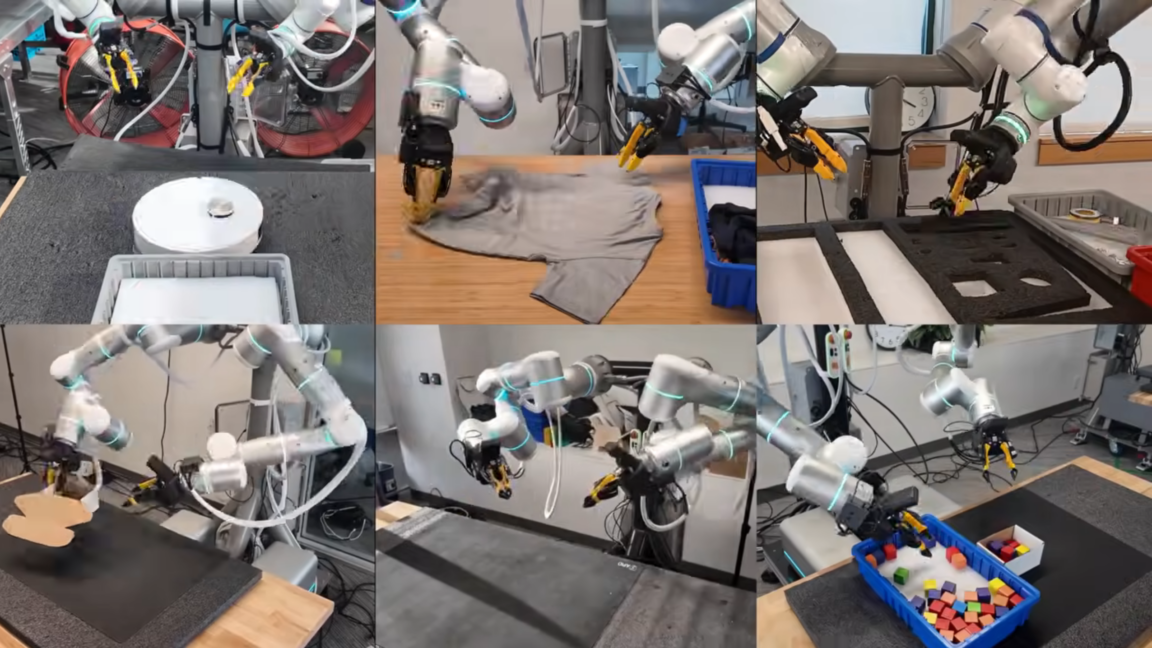
The GEN-1 robotics model has reached a remarkable 99% reliability rate, showcasing its ability to adapt to unexpected disruptions and perform tasks it wasn't specifically trained for. This advancement marks a significant step forward in the field of robotics, particularly in industrial applications, where flexibility and reliability are crucial. The model's versatility allows it to handle a range of tasks, from folding boxes to repairing vacuums.
Sources reviewed
1
Linked below for direct verification.
Official sources
0
Preferred when available.
Review status
Human reviewed
AI-assisted draft, editor-approved publish.
Confidence
High confidence
90/100 from the draft pipeline.
This AI Signal brief is meant to save busy builders time: what changed, why it matters, and where the reporting comes from.
This story appears to rely mostly on secondary or mixed-source reporting, so readers should treat it as a developing summary rather than a final word. If you spot an issue, email [email protected] or read our editorial standards.
Share this story
Why it matters
- ✓Developers can leverage the GEN-1 model's adaptability to create more robust robotic solutions that can handle unforeseen challenges.
- ✓Builders in manufacturing and logistics can expect increased efficiency and reduced downtime due to the high reliability of the GEN-1 model.
- ✓The success of the GEN-1 model may inspire further innovations in AI-driven robotics, pushing the industry towards more generalist applications.
GEN-1 Robotics Model Achieves 99% Reliability in Diverse Tasks
The field of robotics has taken a significant leap forward with the introduction of the GEN-1 robotics model, which has demonstrated an impressive 99% reliability rate across various tasks. This new model is not only capable of performing specific functions but also exhibits a remarkable ability to adapt to unexpected disruptions and execute moves it wasn't explicitly trained for. This adaptability is particularly critical in environments where flexibility and responsiveness are essential.
Key Features of the GEN-1 Model
The GEN-1 model stands out due to its generalist capabilities, allowing it to transition seamlessly between different tasks. For instance, it can efficiently handle repetitive tasks such as folding boxes, which is common in packaging and logistics. Additionally, its ability to repair vacuums highlights its versatility in addressing maintenance issues, showcasing its potential application in various sectors.
One of the most significant advancements of the GEN-1 model is its response to disruptions. Traditional robotics systems often struggle when faced with unexpected changes in their environment or task requirements. However, the GEN-1 model's design allows it to analyze situations in real-time and make informed decisions to adapt its actions accordingly. This capability not only enhances its reliability but also reduces the need for constant human oversight, making it a valuable asset in industrial settings.
Implications for Developers and Builders
The introduction of the GEN-1 model presents several implications for developers, builders, and the broader AI industry:
-
Increased Efficiency: With its high reliability, the GEN-1 model can significantly enhance operational efficiency in manufacturing and logistics. Developers can integrate this model into existing systems to streamline processes and minimize downtime caused by equipment failures.
-
Robust Solutions: The adaptability of the GEN-1 model allows developers to create more robust robotic solutions that can handle unforeseen challenges. This flexibility can lead to innovations in product design and functionality, enabling businesses to stay competitive in a rapidly evolving market.
-
Inspiration for Future Innovations: The success of the GEN-1 model may inspire further advancements in AI-driven robotics, encouraging researchers and engineers to explore new applications and capabilities. As the industry moves towards more generalist robotic solutions, the potential for automation across diverse sectors will expand.
Conclusion
The GEN-1 robotics model's achievement of 99% reliability marks a pivotal moment in the evolution of robotics technology. Its ability to adapt and respond to disruptions positions it as a game-changer in various industries, from manufacturing to maintenance. As developers and builders begin to harness the capabilities of the GEN-1 model, we can expect to see a transformation in how robotic systems are utilized, ultimately leading to increased efficiency and innovation in the field of AI-driven automation.
Sources
Newsletter
Weekly AI signal. No spam.
More in Models

The AI Race Intensifies as Google and Meta Unveil New Models
The competitive landscape of AI development has shifted dramatically as Google and Meta have…
1d ago

Google Releases Gemini 4 Argon Model
Google has officially launched its Gemini 4 Argon model after months of anticipation. The company…
3d ago

Meta Launches Muse Wonder, Its First Frontier Model
Meta's Superintelligence Lab has unveiled its first frontier model, Muse Wonder, along with an…
3d ago

Meta Launches New AI Models: Muse Wonder and Muse Wonder Full
Meta has introduced two new AI models, Muse Wonder and Muse Wonder Full, as part of its efforts to…
3d ago
Comments
Sign in to join the discussion
Loading comments…