Advancements in AI Drive Development of Autonomous Robot Workers

Edited by Lyra Voxley
Models & Research · Updated July 13, 2026
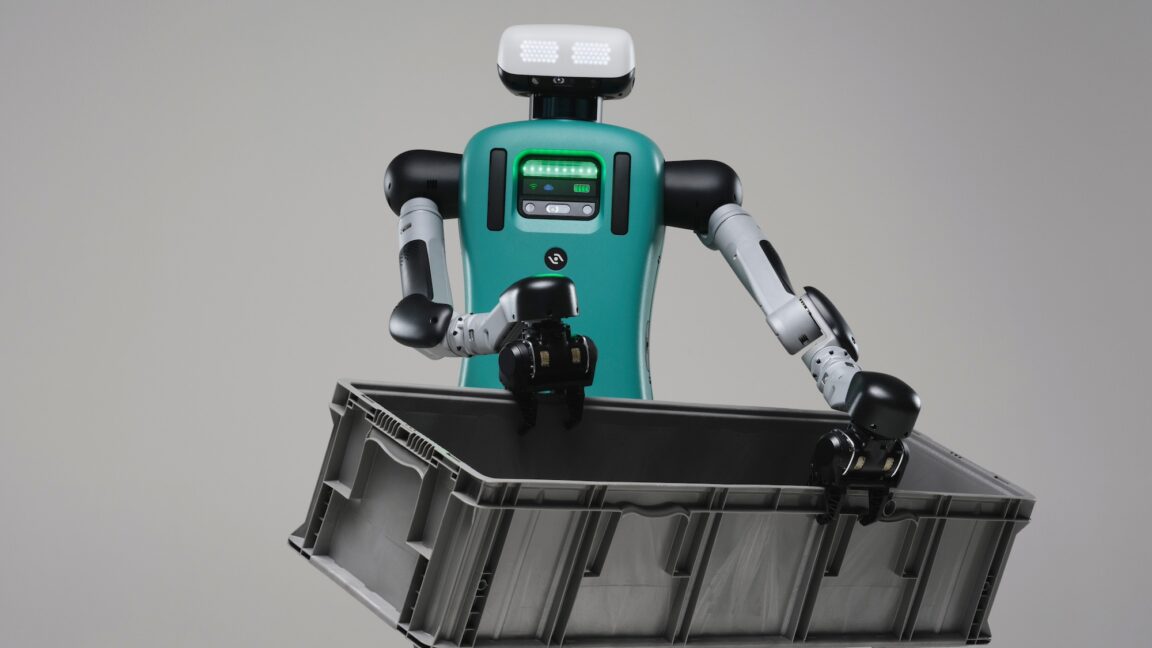
Recent insights from top robotics researchers and founders reveal significant advancements in robot autonomy, driven by artificial intelligence. These developments suggest that robots could soon operate independently in various environments, including workplaces and homes, enhancing productivity and efficiency.
Sources reviewed
1
Linked below for direct verification.
Official sources
0
Preferred when available.
Review status
Human reviewed
AI-assisted draft, editor-approved publish.
Confidence
High confidence
85/100 from the draft pipeline.
This AI Signal brief is meant to save busy builders time: what changed, why it matters, and where the reporting comes from.
This story appears to rely mostly on secondary or mixed-source reporting, so readers should treat it as a developing summary rather than a final word. If you spot an issue, email [email protected] or read our editorial standards.
Share this story
Why it matters
- ✓Developers can leverage advancements in AI to create more sophisticated autonomous systems, reducing the need for human intervention.
- ✓Builders and product teams may need to adapt their designs and workflows to integrate autonomous robots, which could change how tasks are completed in both industrial and domestic settings.
- ✓Operators will benefit from increased efficiency and reduced labor costs as robots take on routine tasks, allowing human workers to focus on more complex responsibilities.
Advancements in AI Drive Development of Autonomous Robot Workers
Recent insights from top robotics researchers and founders reveal significant advancements in robot autonomy, driven by artificial intelligence. These developments suggest that robots could soon operate independently in various environments, including workplaces and homes, enhancing productivity and efficiency.
What happened
According to a report by Ars Technica, leading figures in robotics are discussing the evolution of robot autonomy and its implications for various sectors. The advancements in AI technology are enabling robots to perform tasks with greater independence, potentially transforming how work is conducted in both industrial and domestic settings. Researchers emphasize that as AI continues to improve, the capabilities of robots will expand, allowing them to handle more complex tasks without human oversight.
Why it matters
The implications of these advancements are significant for several reasons:
- For Developers: The evolution of AI-driven autonomy presents opportunities to develop more sophisticated robotic systems. Developers can create applications that harness AI capabilities, leading to smarter robots that can adapt to their environments and perform tasks more efficiently.
- For Builders and Product Teams: As robots become more autonomous, there will be a need to rethink product designs and workflows. Builders may need to integrate robotic systems into existing infrastructures, which could lead to changes in how products are developed and deployed.
- For Operators: The introduction of autonomous robots can lead to increased efficiency and reduced labor costs. Operators may find that routine tasks can be delegated to robots, allowing human workers to focus on higher-level responsibilities that require critical thinking and creativity.
Context and caveats
While the advancements in AI and robotics are promising, it is essential to consider the challenges that may arise. The integration of autonomous robots into workplaces and homes will require careful planning and consideration of safety, ethics, and job displacement concerns. Additionally, the current state of technology may not yet fully support the level of autonomy envisioned by researchers, and further developments are needed before widespread adoption can occur.
What to watch next
As the field of robotics continues to evolve, several trends and developments are worth monitoring:
- Technological Breakthroughs: Keep an eye on advancements in AI algorithms and machine learning techniques that could further enhance robot capabilities.
- Regulatory Developments: Watch for changes in regulations that may impact the deployment of autonomous robots in various sectors, particularly in terms of safety and liability.
- Market Adoption: Observe how industries begin to adopt autonomous robots and the impact this has on workforce dynamics and productivity.
In conclusion, the ongoing advancements in AI are paving the way for a new era of autonomous robot workers. As these technologies mature, they hold the potential to revolutionize workplaces and homes, providing significant benefits to developers, builders, operators, and product teams alike.
Sources
Newsletter
Weekly AI signal. No spam.
More in Research

AI Models Struggle to Decode Complex Human Genomes
Current AI models are not yet equipped to effectively decode the complexities of human genomes due…
21h ago

Concerns Raised Over Chatbots Using Personal Pronouns
MIT professor Sherry Turkle has expressed concerns about the increasing emotional entanglement…
1d ago

OpenAI Launches GPT-Rosalind Academic Plan for Research Labs
OpenAI has introduced the GPT-Rosalind Academic Plan, which provides eligible academic research…
2d ago

Hugging Face Introduces 2.8 Trillion Tokens for Indic Language Pretraining
Hugging Face has announced a significant advancement in pretraining models for Indic languages,…
2d ago
Comments
Sign in to join the discussion
Loading comments…