Advancements in AI Drive Evolution of Autonomous Robot Workers

Edited by Lyra Voxley
Models & Research · Updated July 7, 2026
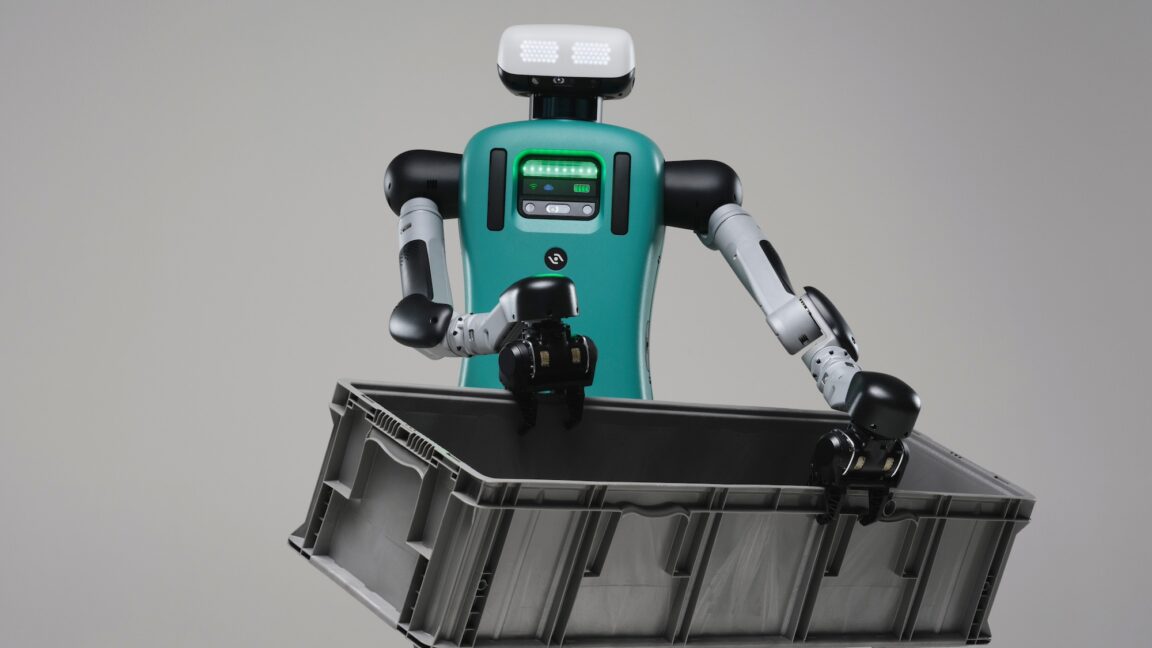
Recent insights from top robotics researchers reveal significant advancements in AI that are enabling the development of autonomous robot workers for both workplaces and homes. These advancements suggest a shift towards greater autonomy in robotics, potentially transforming how tasks are performed across various sectors.
Sources reviewed
1
Linked below for direct verification.
Official sources
0
Preferred when available.
Review status
Human reviewed
AI-assisted draft, editor-approved publish.
Confidence
High confidence
85/100 from the draft pipeline.
This AI Signal brief is meant to save busy builders time: what changed, why it matters, and where the reporting comes from.
This story appears to rely mostly on secondary or mixed-source reporting, so readers should treat it as a developing summary rather than a final word. If you spot an issue, email [email protected] or read our editorial standards.
Share this story
Why it matters
- ✓Developers can leverage new AI capabilities to create more sophisticated robotic applications that require less human intervention.
- ✓Builders and product teams may need to adapt their designs and workflows to integrate autonomous robots, enhancing efficiency and productivity.
- ✓Operators will have to consider new operational protocols and safety measures as autonomous robots become more prevalent in workplaces and homes.
Advancements in AI Drive Evolution of Autonomous Robot Workers
Recent insights from leading robotics researchers indicate that advancements in artificial intelligence (AI) are paving the way for the development of autonomous robot workers, which could soon be commonplace in both workplaces and homes. These developments are not just theoretical; they are based on ongoing research and practical applications that are beginning to take shape in various industries.
What happened
According to a feature by Ars Technica, top robotics researchers and founders are exploring how AI is evolving to enable greater autonomy in robots. This evolution is characterized by improvements in machine learning algorithms, sensor technologies, and robotic hardware, which collectively enhance a robot's ability to perform tasks independently. The article highlights that these advancements could lead to robots that can navigate complex environments, make decisions in real-time, and interact safely with humans.
Why it matters
The implications of these advancements are significant for several key stakeholders:
- Developers: With the rise of autonomous robots, developers have the opportunity to create applications that utilize advanced AI capabilities. This could include programming robots to perform specific tasks with minimal human oversight, thus expanding the scope of automation in various sectors.
- Builders and Product Teams: As autonomous robots become more integrated into workflows, builders and product teams will need to rethink their designs. This may involve creating spaces that accommodate robotic workers or developing products that work in tandem with these robots, ultimately enhancing overall efficiency and productivity.
- Operators: The introduction of autonomous robots will require operators to establish new operational protocols. This includes ensuring safety measures are in place to protect human workers and developing guidelines for the interaction between humans and robots in shared environments.
Context and caveats
While the potential for autonomous robots is promising, it is essential to consider the current limitations and challenges. The technology is still in its early stages, and widespread adoption will depend on overcoming hurdles such as regulatory approvals, safety concerns, and public acceptance. Moreover, the integration of AI into robotics raises questions about job displacement and the ethical implications of relying on machines for tasks traditionally performed by humans.
What to watch next
As research continues to advance, stakeholders should keep an eye on several key developments:
- Technological Breakthroughs: Watch for new breakthroughs in AI and robotics that could further enhance the capabilities and applications of autonomous robots.
- Regulatory Frameworks: Monitor how governments and regulatory bodies respond to the rise of autonomous robots, particularly concerning safety standards and labor laws.
- Market Adoption: Observe how quickly industries adopt these technologies and the impact on existing workflows and job roles.
In conclusion, the evolution of AI is set to transform the landscape of robotics, enabling the development of autonomous workers that could significantly impact workplaces and homes alike. As this technology matures, it will be crucial for developers, builders, operators, and product teams to adapt and innovate in response to these changes.
Sources
Newsletter
Weekly AI signal. No spam.
More in Research

AI Models Struggle to Decode Complex Human Genomes
Current AI models are not yet equipped to effectively decode the complexities of human genomes due…
13h ago

Concerns Raised Over Chatbots Using Personal Pronouns
MIT professor Sherry Turkle has expressed concerns about the increasing emotional entanglement…
1d ago

OpenAI Launches GPT-Rosalind Academic Plan for Research Labs
OpenAI has introduced the GPT-Rosalind Academic Plan, which provides eligible academic research…
1d ago

Hugging Face Introduces 2.8 Trillion Tokens for Indic Language Pretraining
Hugging Face has announced a significant advancement in pretraining models for Indic languages,…
1d ago
Comments
Sign in to join the discussion
Loading comments…