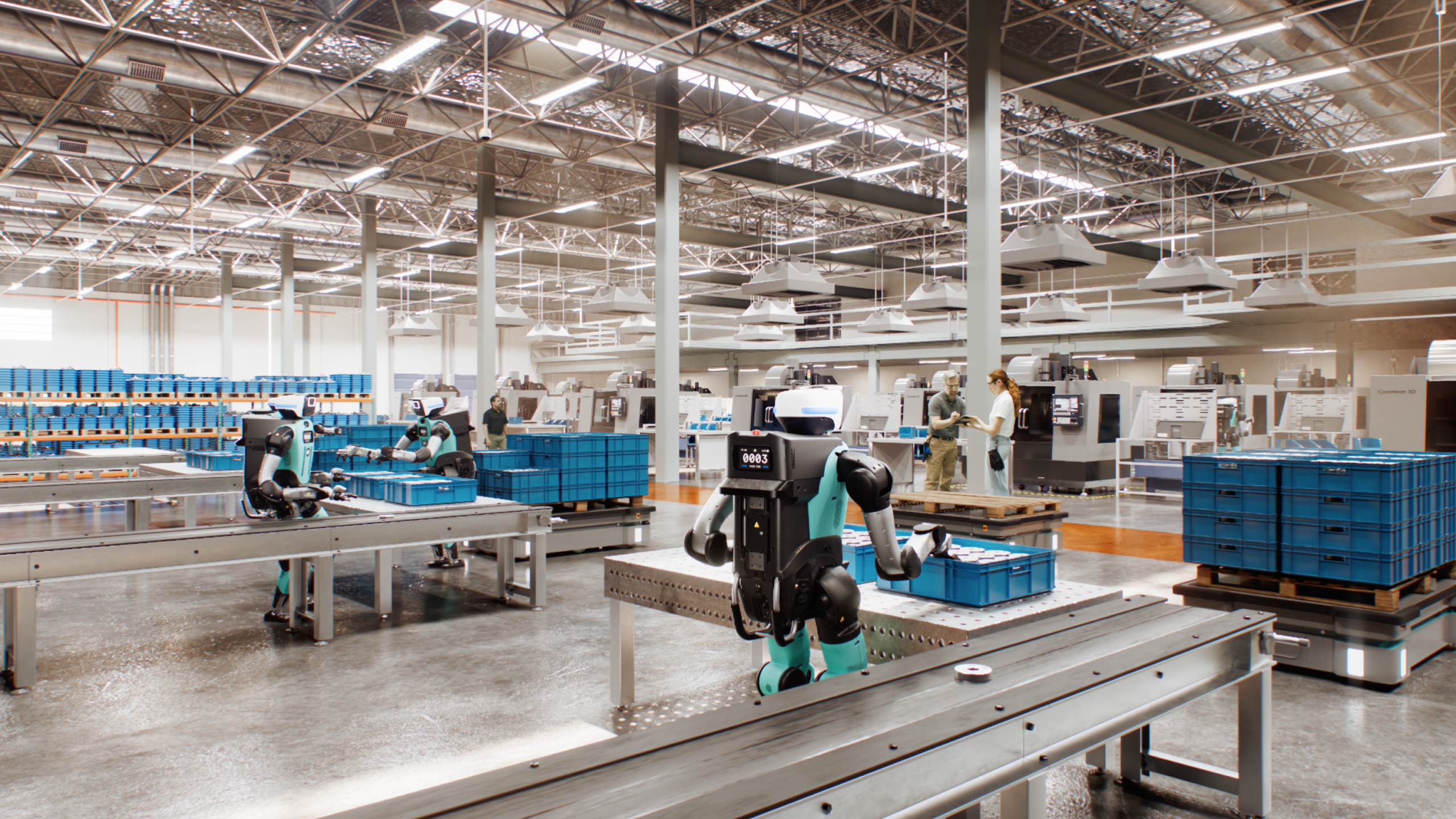
Agility's Humanoid Robot Designed to Safeguard Human Workers
Updated September 16, 2026
Agility Robotics has unveiled a new humanoid robot that can autonomously stop and squat to prevent harming human coworkers. This advancement allows robots to operate outside of traditional safety barriers, enhancing their integration into workplaces. The development marks a significant step toward safer human-robot collaboration in various industries.
Sources reviewed
1
Linked below for direct verification.
Official sources
0
Preferred when available.
Review status
Human reviewed
AI-assisted draft, editor-approved publish.
Confidence
High confidence
90/100 from the draft pipeline.
This AI Signal brief is meant to save busy builders time: what changed, why it matters, and where the reporting comes from.
This story appears to rely mostly on secondary or mixed-source reporting, so readers should treat it as a developing summary rather than a final word. If you spot an issue, email [email protected] or read our editorial standards.
Share this story
Why it matters
- ✓Developers can leverage this technology to create more adaptable robots that can work alongside humans without the need for extensive safety measures.
- ✓Builders and operators can improve efficiency in environments where human-robot interaction is frequent, reducing the need for physical barriers.
- ✓Product teams can explore new applications for humanoid robots in sectors like manufacturing, logistics, and healthcare, where safety and collaboration are paramount.
Agility's Humanoid Robot Designed to Safeguard Human Workers
Agility Robotics has introduced a groundbreaking humanoid robot capable of autonomously stopping and squatting to avoid harming human coworkers. This innovation allows robots to operate outside of traditional safety cages and barriers, potentially transforming workplace dynamics and enhancing safety protocols in environments where humans and robots work side by side.
What happened
According to a report by Ars Technica, Agility's new humanoid robot is designed with advanced safety features that enable it to recognize when a human is nearby and respond appropriately. By stopping and squatting, the robot minimizes the risk of accidental injury, making it safer for human workers to collaborate with robotic counterparts. This development signifies a shift in how robots can be integrated into various industries, moving away from the need for restrictive safety measures.
Why it matters
The implications of this technology are significant for several reasons:
- Enhanced Collaboration: Developers can utilize this technology to create robots that work more effectively alongside humans, fostering a collaborative environment without the need for extensive safety barriers.
- Increased Efficiency: Builders and operators can streamline workflows in environments where human-robot interaction is common, as the robots can operate more freely, reducing downtime associated with safety checks and barriers.
- New Applications: Product teams can explore innovative uses for humanoid robots in sectors such as manufacturing, logistics, and healthcare, where safety and collaboration are critical. The ability to safely integrate robots into these environments could lead to increased productivity and improved outcomes.
Context and caveats
While this development is promising, it is essential to consider the broader context of robotic safety and human interaction. The ability of robots to autonomously respond to human presence is a significant advancement, but it also raises questions about the reliability of such systems in diverse and unpredictable environments. Further testing and real-world applications will be necessary to fully understand the effectiveness and limitations of these safety features.
What to watch next
As Agility Robotics continues to develop and refine its humanoid robots, industry stakeholders should monitor the following:
- Field Trials: Look for updates on real-world testing of these robots in various industries to assess their performance and safety in dynamic environments.
- Regulatory Developments: Keep an eye on how regulatory bodies respond to the integration of humanoid robots in workplaces, particularly regarding safety standards and guidelines.
- Technological Advancements: Watch for advancements in AI and machine learning that could further enhance the capabilities of humanoid robots, making them even safer and more efficient in human-robot collaboration.
In conclusion, Agility Robotics' new humanoid robot represents a significant step toward safer and more effective human-robot collaboration. As this technology evolves, it has the potential to reshape industries and redefine how humans and robots interact in the workplace.
Sources
Comments
Log in with
Loading comments…
More in Tools

Meta Introduces AI Agents for WhatsApp Business Setup
Meta has launched a new WhatsApp Business MCP server that allows developers to utilize AI coding…
7h ago

Fashion App Daydream Integrates Apple Intelligence for Enhanced Shopping Experience
The fashion app Daydream has launched new features that leverage Apple Intelligence following the…
19h ago

Salesforce and Nvidia Launch New Reasoning Model for Sales and Support Tasks
Salesforce has unveiled Koa, a new reasoning model built on Nvidia's open-weight Nemotron…
19h ago

Apple Releases iOS 27 and macOS Golden Gate 27 with Enhanced Siri AI and Liquid Glass Features
Apple has officially launched iOS 27 and macOS Golden Gate 27, introducing significant enhancements…
1d ago