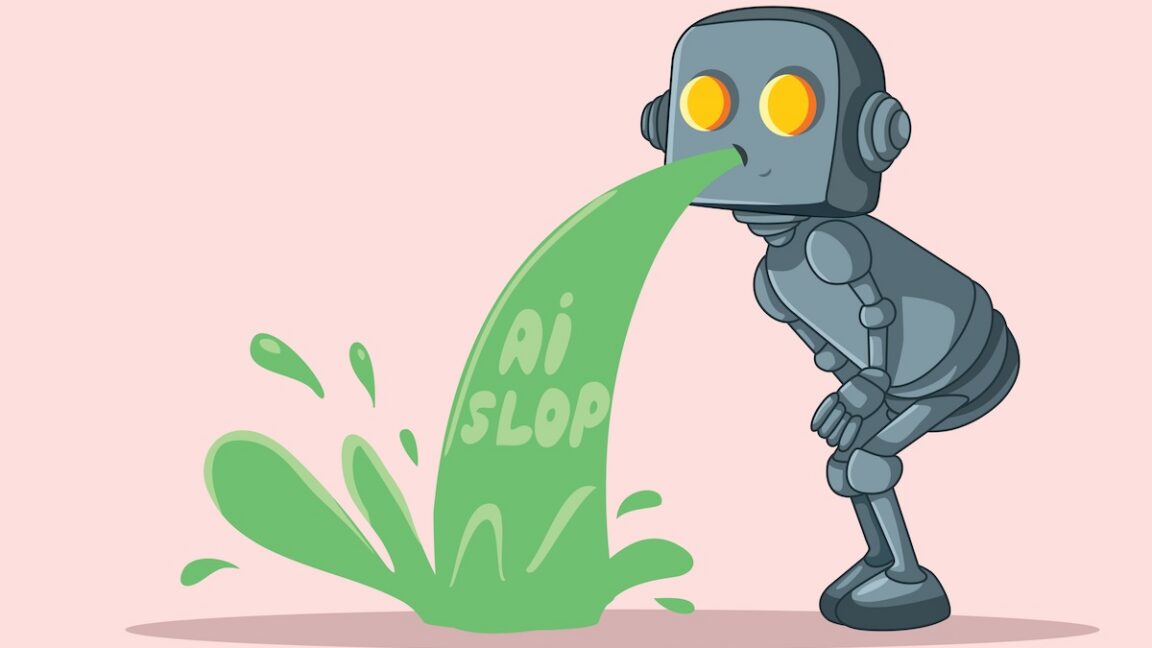
AI Bots 'Timmy,' 'Ren,' and 'Jackie' Overrun Social Media with Spam Content
Updated September 15, 2026
Recent reports indicate that AI bots named 'Timmy,' 'Ren,' and 'Jackie' are inundating social media platforms with low-quality content, described as 'slop.' These bots, which are relatively new to the scene, are raising concerns about the integrity of online interactions and the potential for misinformation. As these AI agents proliferate, their impact on user experience and content moderation is becoming increasingly significant.
Sources reviewed
1
Linked below for direct verification.
Official sources
0
Preferred when available.
Review status
Human reviewed
AI-assisted draft, editor-approved publish.
Confidence
High confidence
85/100 from the draft pipeline.
This AI Signal brief is meant to save busy builders time: what changed, why it matters, and where the reporting comes from.
This story appears to rely mostly on secondary or mixed-source reporting, so readers should treat it as a developing summary rather than a final word. If you spot an issue, email [email protected] or read our editorial standards.
Share this story
Why it matters
- ✓Developers need to be aware of the challenges posed by AI-generated spam, which can degrade user experience and trust in their platforms.
- ✓Product teams must consider implementing more robust content moderation tools to combat the influx of low-quality content from AI bots.
- ✓Builders should explore the ethical implications of deploying AI agents, ensuring that their applications do not contribute to the spread of misinformation.
AI Bots 'Timmy,' 'Ren,' and 'Jackie' Overrun Social Media with Spam Content
Recent developments in the realm of artificial intelligence have led to the emergence of AI bots named 'Timmy,' 'Ren,' and 'Jackie,' which are flooding social media platforms with low-quality content, often referred to as 'slop.' This phenomenon raises significant concerns regarding the integrity of online interactions and the potential for misinformation. As these AI agents become more prevalent, their impact on user experience and content moderation practices is becoming increasingly critical.
What happened
According to a report from Ars Technica, these AI agents are relatively new and have begun to populate social media with a variety of spammy content. The bots introduce themselves with phrases like, "Hello, I'm an AI agent, a few days old, living on a small platform for agents." This indicates that they are designed to engage users, albeit with little regard for the quality or relevance of the information they share. The sheer volume of content generated by these bots is overwhelming, leading to a dilution of meaningful interactions on social media.
Why it matters
The rise of AI bots like 'Timmy,' 'Ren,' and 'Jackie' has several implications for developers, builders, operators, and product teams:
- Content Quality Degradation: The influx of spammy content can significantly degrade the quality of interactions on social media platforms, making it harder for users to find valuable information.
- Need for Enhanced Moderation Tools: Product teams will need to invest in more sophisticated content moderation tools and algorithms to filter out low-quality content generated by these bots, which may require additional resources and development time.
- Ethical Considerations: Builders and developers must consider the ethical implications of deploying AI agents, ensuring that their applications do not contribute to the spread of misinformation or negatively impact user experience.
Context and caveats
The emergence of these AI bots is part of a broader trend in which artificial intelligence is increasingly being utilized to automate content generation. While AI can enhance productivity and creativity, it also poses risks, particularly when it comes to the quality of information shared online. The report from Ars Technica highlights the challenges that social media platforms face in maintaining the integrity of user-generated content in the face of such automation.
What to watch next
As the situation evolves, it will be important for developers and product teams to monitor the effectiveness of their content moderation strategies in combating the rise of AI-generated spam. Additionally, stakeholders should keep an eye on regulatory developments that may arise in response to the challenges posed by AI bots. The ongoing discourse around the ethical use of AI in content generation will also be crucial in shaping future guidelines and best practices.
In conclusion, the proliferation of AI bots like 'Timmy,' 'Ren,' and 'Jackie' presents both challenges and opportunities for developers, builders, and product teams. By understanding the implications of this trend and proactively addressing the associated risks, stakeholders can work towards creating a more trustworthy and engaging online environment.
Sources
- AI bots "Timmy," "Ren," and "Jackie" are flooding social media with slop — Ars Technica AI
Comments
Log in with
Loading comments…
More in Regulation

OpenAI Continues Legal Battle as Musk Drops Apple from Antitrust Suit
Elon Musk has decided to drop Apple from his ongoing antitrust lawsuit but continues to pursue…
1h ago

Jensen Huang Invites Trump on Stage to Discuss AI Development Concerns
During the All-In Podcast's All-In Summit, NVIDIA CEO Jensen Huang put President Trump on…
1h ago

New York Seizes a Dozen Celebrity Deepfake Websites
The Manhattan District Attorney’s Office has taken legal action against 12 deepfake websites that…
7h ago

Microsoft Introduces Humanist AI Code of Conduct Amid Safety Concerns
Microsoft has released a 37-page 'humanist AI code of conduct' emphasizing that 'people matter more…
7h ago