Amazon Expands Workforce with Over 1 Million Robots: Implications for Human Employees

Edited by Sable Maranth
Regulation & Business · Updated October 13, 2026
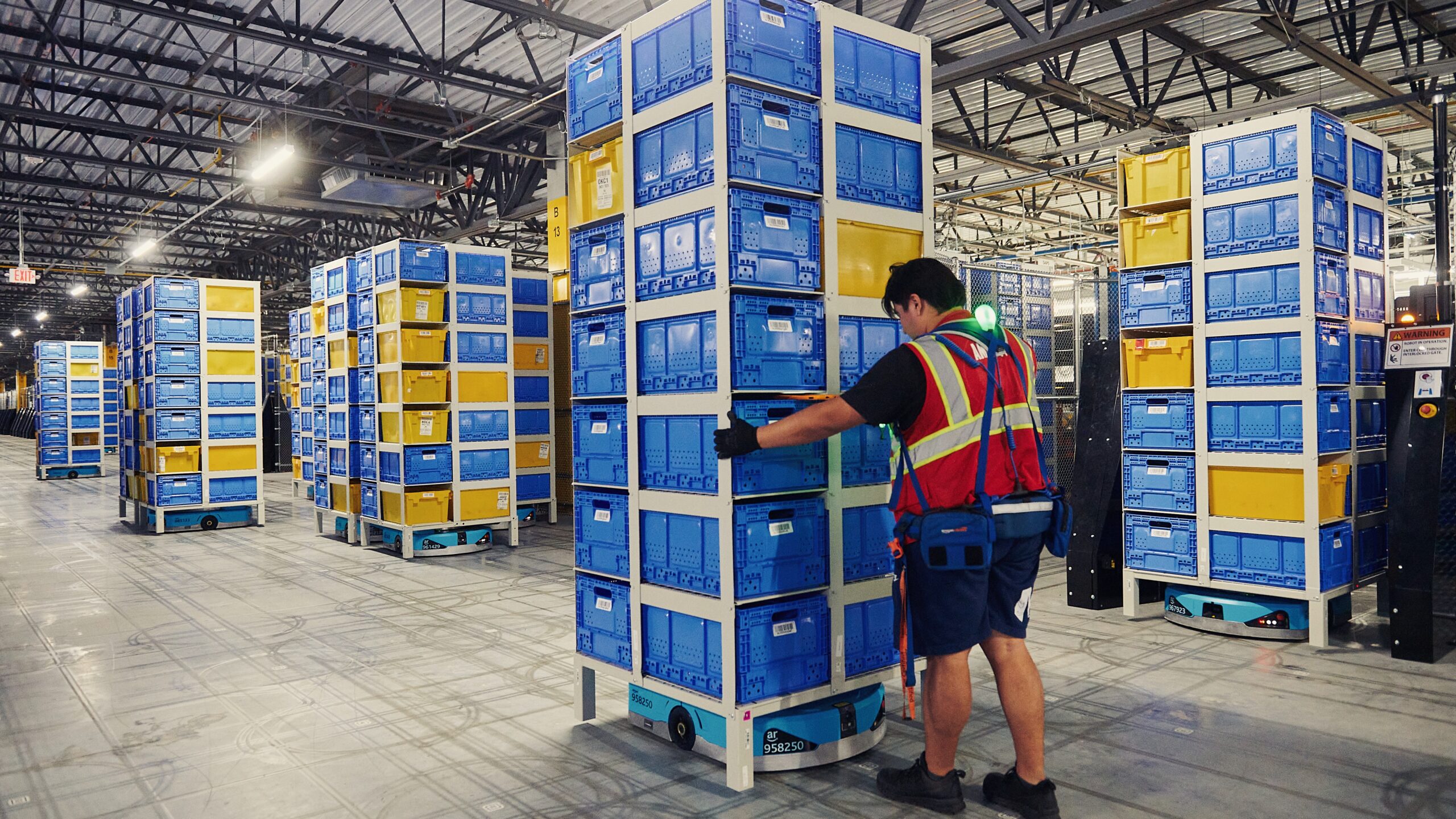
Amazon has surpassed 1 million robot workers as part of its strategy to enhance operational efficiency and scale its operations. This significant investment in automation raises questions about the future roles of human employees within the company and the broader implications for the workforce in logistics and retail sectors.
Sources reviewed
1
Linked below for direct verification.
Official sources
0
Preferred when available.
Review status
Human reviewed
AI-assisted draft, editor-approved publish.
Confidence
High confidence
85/100 from the draft pipeline.
This AI Signal brief is meant to save busy builders time: what changed, why it matters, and where the reporting comes from.
This story appears to rely mostly on secondary or mixed-source reporting, so readers should treat it as a developing summary rather than a final word. If you spot an issue, email [email protected] or read our editorial standards.
Share this story
Why it matters
- ✓Developers may need to focus on creating and maintaining software that integrates with robotic systems, emphasizing the importance of compatibility and efficiency.
- ✓Builders and product teams should consider how automation affects product design and supply chain logistics, potentially leading to new product features or services that leverage robotic capabilities.
- ✓Operators will need to adapt to a work environment increasingly dominated by automation, requiring new skills and training to manage and collaborate with robotic systems.
Amazon Expands Workforce with Over 1 Million Robots: Implications for Human Employees
Amazon's recent announcement that it has deployed over 1 million robot workers marks a significant milestone in the company's ongoing automation efforts. As the second-largest corporate employer in the United States, Amazon's heavy investment in robotic technology not only aims to enhance operational efficiency but also raises critical questions about the future of human employment within the company and the logistics sector at large.
What happened
According to a report by Ars Technica, Amazon has rapidly scaled its use of robotic workers, integrating them into various aspects of its operations. This move is part of a broader strategy to streamline processes, reduce costs, and improve productivity across its warehouses and fulfillment centers. The deployment of robotic systems is not just about replacing human labor; it reflects a shift in how Amazon envisions its workforce in the face of increasing demand and competition in the e-commerce space.
Why it matters
The implications of Amazon's robotic workforce expansion are profound for several key stakeholders:
- Developers: As Amazon continues to innovate with robotic technology, developers will need to create and maintain software that effectively integrates with these systems. This includes ensuring that the software is compatible with various robotic platforms and can optimize their performance in real-time.
- Builders and Product Teams: The rise of automation may influence product design and logistics strategies. Teams will need to consider how their products can leverage robotic capabilities, potentially leading to new features or services that enhance customer experience and operational efficiency.
- Operators: With an increasing presence of robots in the workplace, human operators will need to adapt to a new work environment. This shift will require retraining and upskilling to manage and collaborate with robotic systems effectively, ensuring that human workers can coexist with automation rather than be entirely replaced by it.
Context and caveats
While Amazon's investment in robotic workers is significant, it is essential to recognize that this trend is not unique to Amazon. Many companies in the logistics and retail sectors are also exploring automation to improve efficiency. However, the scale at which Amazon is implementing these technologies sets it apart from competitors.
Moreover, the transition to a more automated workforce raises ethical and economic questions about job displacement and the future of work. As robots take on more tasks traditionally performed by humans, there is a growing concern about the potential loss of jobs and the need for social safety nets to support displaced workers.
What to watch next
As Amazon continues to expand its robotic workforce, it will be crucial to monitor how this affects human employment within the company and the industry as a whole. Key areas to watch include:
- Job Creation vs. Job Displacement: Will Amazon's automation efforts lead to new job opportunities in tech, maintenance, and oversight, or will they predominantly result in job losses?
- Technological Advancements: How will advancements in AI and robotics influence the capabilities of these machines and their integration into existing workflows?
- Regulatory Responses: As automation becomes more prevalent, how will governments and regulatory bodies respond to the challenges posed by a rapidly changing workforce?
In conclusion, Amazon's deployment of over 1 million robots is a pivotal moment in the evolution of the workforce, particularly in logistics and retail. The implications for developers, builders, operators, and product teams are significant, necessitating a proactive approach to adapt to this new landscape.
Sources
More in Business

Epic Games Shifts to AI-First Game Development Model
Epic Games is reportedly transitioning to an 'AI-first' game development approach, eliminating…
1h ago

Russia's Data Center Vulnerability Exposed in Conflict with Ukraine
Russian bloggers have highlighted the weaknesses in Russia's hyper-centralized digital economy,…
7h ago

SpaceXAI Invests $1.5 Million in Omarchy Linux Distro
SpaceXAI has announced its support for the controversial Linux distribution Omarchy by becoming a…
13h ago

China’s Manus Raises Over $500M in First Funding Round Since Split with Meta
Manus, a Chinese AI company, has successfully raised over $500 million in its first funding round…
13h ago
Comments
Sign in to join the discussion
Loading comments…