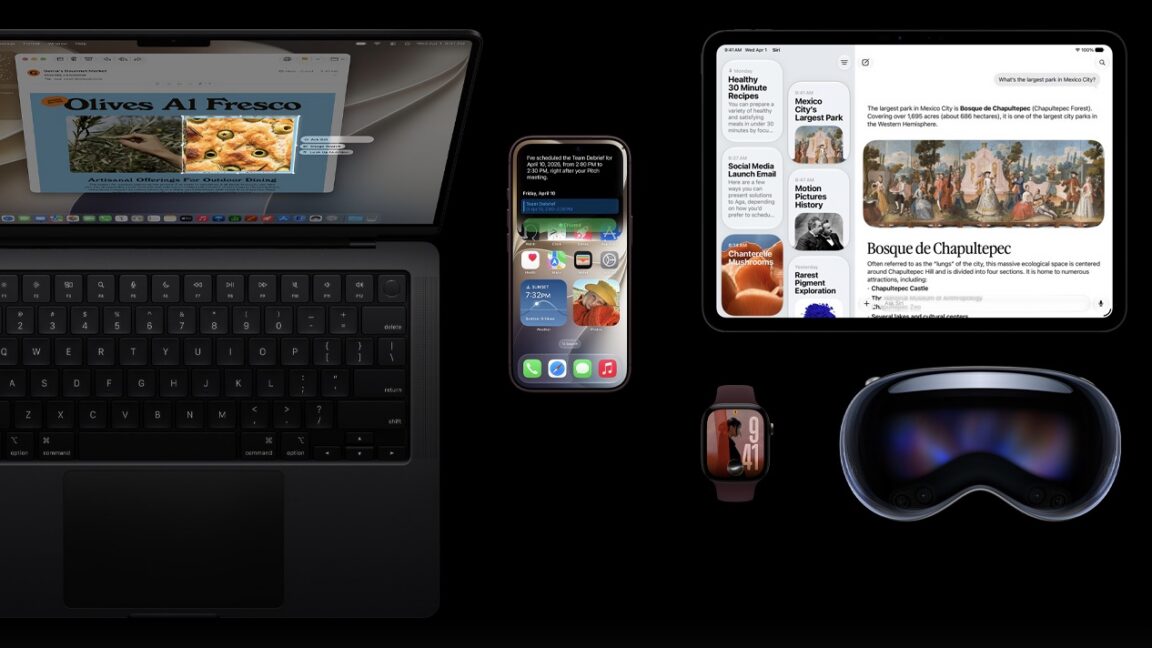
Apple Releases iOS 27 and macOS Golden Gate 27 with Enhanced Siri AI and Liquid Glass Features
Updated September 15, 2026
Apple has officially launched iOS 27 and macOS Golden Gate 27, introducing significant enhancements to Siri AI and new Liquid Glass refinements. Notably, this release marks the final version of macOS to support Rosetta for Intel applications, signaling a shift towards Apple Silicon compatibility. Developers and product teams will need to adapt to these changes as they impact app compatibility and user experience.
Sources reviewed
1
Linked below for direct verification.
Official sources
0
Preferred when available.
Review status
Human reviewed
AI-assisted draft, editor-approved publish.
Confidence
High confidence
90/100 from the draft pipeline.
This AI Signal brief is meant to save busy builders time: what changed, why it matters, and where the reporting comes from.
This story appears to rely mostly on secondary or mixed-source reporting, so readers should treat it as a developing summary rather than a final word. If you spot an issue, email [email protected] or read our editorial standards.
Share this story
Why it matters
- ✓Developers must prepare for the end of Rosetta support, which will require transitioning Intel-based applications to run natively on Apple Silicon.
- ✓The enhancements to Siri AI may provide new opportunities for developers to integrate more advanced voice functionalities into their applications.
- ✓The introduction of Liquid Glass technology could influence design and user interface considerations, as developers may want to leverage its unique properties in their apps.
Apple Releases iOS 27 and macOS Golden Gate 27 with Enhanced Siri AI and Liquid Glass Features
Apple has officially launched its latest operating systems, iOS 27 and macOS Golden Gate 27, which come packed with new features and improvements. This release is particularly significant as it introduces enhanced capabilities for Siri AI and new Liquid Glass refinements. Moreover, it marks the end of support for Rosetta, the translation layer for Intel apps on macOS, emphasizing Apple's ongoing transition to its own Silicon architecture.
What Happened
On September 2026, Apple rolled out iOS 27 and macOS Golden Gate 27, showcasing a series of updates aimed at improving user experience and application performance. The most notable feature in this release is the enhancement of Siri AI, which is expected to provide more intuitive and responsive interactions for users. Additionally, the introduction of Liquid Glass technology promises to refine the aesthetic and functional aspects of Apple devices.
This update also signals a pivotal change for macOS users, as it is the last version to support Rosetta for Intel applications. This means that developers who have not yet transitioned their applications to run natively on Apple Silicon will need to do so to ensure continued compatibility in future macOS updates.
Why It Matters
The release of iOS 27 and macOS Golden Gate 27 carries several implications for developers, builders, and product teams:
- End of Rosetta Support: Developers must prepare for the discontinuation of Rosetta support, which will require them to transition their Intel-based applications to run natively on Apple Silicon. This shift could involve significant development resources and time.
- Enhanced Siri AI: With improvements to Siri AI, developers have the opportunity to integrate more advanced voice functionalities into their applications, potentially enhancing user engagement and satisfaction.
- Liquid Glass Technology: The introduction of Liquid Glass may influence design choices for developers, as its unique properties can be leveraged to create more visually appealing and durable applications, particularly in terms of user interface design.
Context and Caveats
While the enhancements in Siri AI and the introduction of Liquid Glass are promising, developers should be aware that the transition away from Intel support may pose challenges. Those who have built applications relying on Rosetta will need to prioritize updates to ensure compatibility with future macOS versions. Additionally, the specific capabilities of the new Liquid Glass technology and how it can be utilized in app development are still emerging, and developers will need to stay informed about best practices and guidelines from Apple.
What to Watch Next
As Apple continues to refine its software ecosystem, developers should keep an eye on:
- Future Updates on Apple Silicon: As Apple moves further away from Intel architecture, it will be crucial for developers to stay updated on any new tools or frameworks that Apple releases to facilitate this transition.
- Siri AI Capabilities: Monitoring the evolution of Siri AI will be important for developers looking to enhance their applications with voice functionalities, as Apple may introduce additional features or APIs in future updates.
- Liquid Glass Applications: Observing how Liquid Glass technology is adopted in the industry will provide insights into its potential applications and best practices for integration into software products.
In conclusion, the release of iOS 27 and macOS Golden Gate 27 represents a critical juncture for Apple and its developer community. With the end of Rosetta support and the introduction of new technologies, developers will need to adapt quickly to maintain compatibility and leverage new features that can enhance their applications.
Sources
Comments
Log in with
Loading comments…
More in Tools
DevFest 2026 Returns with Global Events for AI Development
DevFest 2026 has been announced, bringing back over 800 global events focused on building,…
13h ago

Apple's Siri Overhaul Arrives with iOS 27
Apple has released a significant overhaul of Siri with the launch of iOS 27, enhancing the…
13h ago

Chatbots Empower Readers to Create Custom Fiction
A growing number of readers are leveraging chatbots to generate personalized fiction, as…
19h ago

Hugging Face Introduces Async GRPO with LoRA for Enhanced Job Management
Hugging Face has announced the implementation of Async Gradient Reduction and Parameter…
19h ago