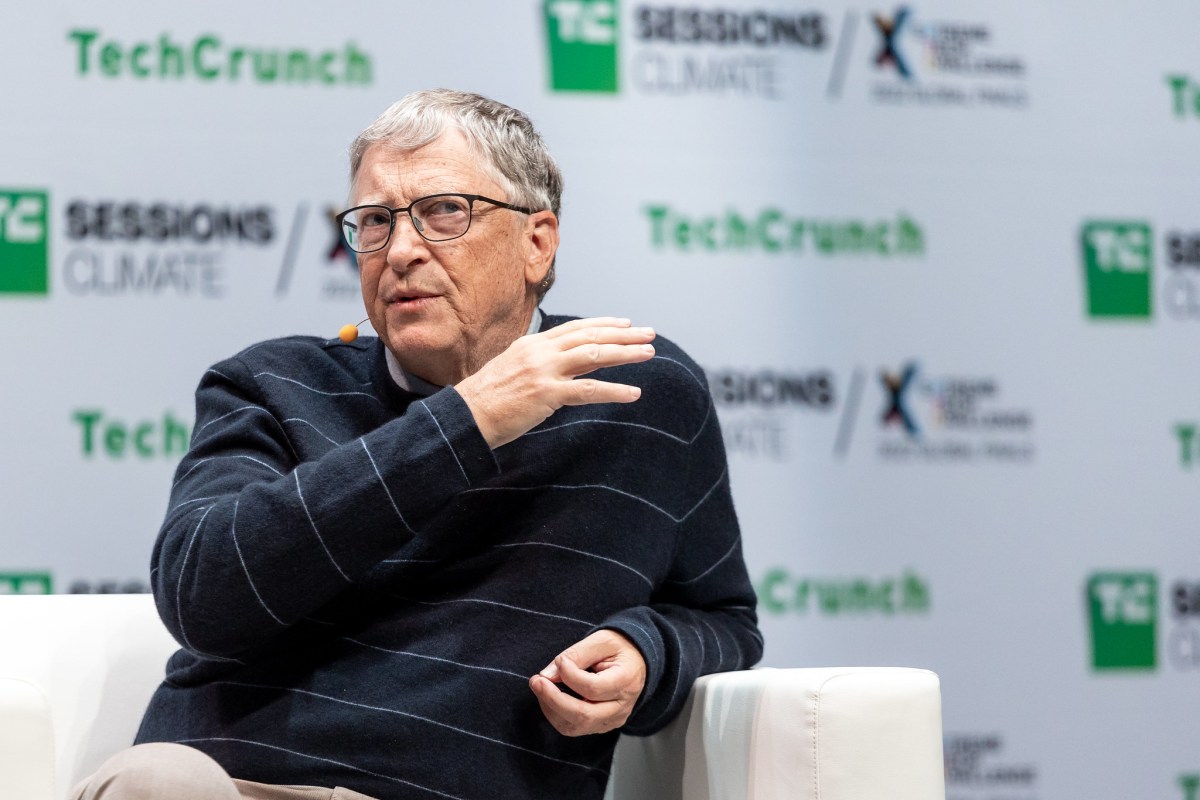
Bill Gates Advocates for Robot Tax and 'Human Reserved' Jobs to Address AI Impact

Edited by Sable Maranth
Regulation & Business · Updated August 26, 2026
Bill Gates has proposed the implementation of a robot tax and the establishment of 'Human Reserved' jobs as measures to mitigate the negative impacts of artificial intelligence. His suggestions aim to ensure that the benefits of AI are shared more equitably and to protect jobs that are essential for human workers. This initiative aligns with Gates' stance on responsible AI development.
Sources reviewed
1
Linked below for direct verification.
Official sources
0
Preferred when available.
Review status
Human reviewed
AI-assisted draft, editor-approved publish.
Confidence
High confidence
90/100 from the draft pipeline.
This AI Signal brief is meant to save busy builders time: what changed, why it matters, and where the reporting comes from.
This story appears to rely mostly on secondary or mixed-source reporting, so readers should treat it as a developing summary rather than a final word. If you spot an issue, email [email protected] or read our editorial standards.
Share this story
Why it matters
- ✓Developers and product teams may need to consider the implications of a robot tax in their business models, potentially affecting the cost structure of AI implementations.
- ✓The concept of 'Human Reserved' jobs could lead to new regulations that prioritize human employment in certain sectors, impacting hiring practices and job design.
- ✓This initiative may drive innovation in AI ethics and responsible development, encouraging teams to focus on creating AI solutions that complement rather than replace human labor.
Bill Gates Advocates for Robot Tax and 'Human Reserved' Jobs to Address AI Impact
Bill Gates has recently put forth a proposal advocating for a robot tax and the creation of 'Human Reserved' jobs to help mitigate the adverse effects of artificial intelligence (AI). His suggestions are aimed at ensuring that the benefits of AI are distributed more equitably across society and to protect jobs that are crucial for human workers. This initiative reflects Gates' commitment to responsible AI development and its implications for the workforce.
What happened
In a recent discussion, Gates emphasized the need for a robot tax, which would impose levies on companies that deploy AI and robotics in their operations. He believes that such a tax could help fund social programs and support workers displaced by automation. Additionally, Gates proposed the idea of 'Human Reserved' jobs, which would be positions specifically designated for human workers, thereby safeguarding employment in sectors where human labor is essential.
These proposals are part of a broader conversation about how to manage the integration of AI into the workforce and the potential displacement of jobs. Gates' ideas are particularly relevant as AI technologies continue to advance rapidly, raising concerns about their impact on employment and economic inequality.
Why it matters
Gates' proposals have significant implications for various stakeholders in the tech industry:
- Developers and product teams may need to reassess their business models in light of a potential robot tax, which could increase operational costs for companies that rely heavily on AI and automation.
- The establishment of 'Human Reserved' jobs could lead to new regulations that prioritize human employment in specific sectors, influencing hiring practices and the design of job roles within organizations.
- This initiative may catalyze innovation in AI ethics and responsible development, prompting teams to focus on creating AI solutions that enhance human capabilities rather than replace them.
Context and caveats
Gates is known for his advocacy of responsible AI, and his recent proposals are not entirely new. The concept of taxing automation has been discussed in various forms by economists and policymakers, particularly as concerns about job displacement grow. However, Gates' specific suggestions regarding a robot tax and 'Human Reserved' jobs introduce fresh ideas into the ongoing debate about AI's role in society.
It is important to note that while these proposals are thought-provoking, their implementation would require careful consideration and collaboration among policymakers, businesses, and the tech community. The effectiveness of such measures in achieving their intended goals remains to be seen, and there may be challenges in defining what constitutes a 'Human Reserved' job.
What to watch next
As discussions around AI regulation continue to evolve, stakeholders should keep an eye on:
- Legislative developments regarding the robot tax and employment regulations, as governments may begin to explore these ideas more seriously in response to public concerns about AI's impact on jobs.
- Industry responses from tech companies and developers regarding how they plan to adapt to potential changes in the regulatory landscape, particularly in terms of AI deployment and workforce management.
- Public sentiment and advocacy efforts surrounding AI ethics and job protection, as these factors could influence policymakers and shape the future of AI regulation.
In conclusion, Bill Gates' advocacy for a robot tax and 'Human Reserved' jobs highlights the need for proactive measures to address the challenges posed by AI in the workforce. As the conversation continues, it will be crucial for developers, builders, and product teams to stay informed and engaged in shaping the future of AI responsibly.
Sources
Newsletter
Weekly AI signal. No spam.
More in Regulation

Trump Shares AI-Edited Photo of White House Renovations
Former President Donald Trump recently posted an AI-modified image on Truth Social, showcasing…
3h ago

Meta Revises Commercial TOS to Mitigate AI Licensing Costs
Meta has updated its commercial Terms of Service (TOS), which legal experts suggest may be a…
3h ago

Meta's New Terms May Enable Free AI Training on News Sites
Meta has updated its business terms to allow the company to crawl and scrape content from websites…
9h ago

Meta Updates Terms to Address Scraping and AI Training Concerns
Meta has removed specific language from its terms of service that previously raised concerns…
9h ago
Comments
Sign in to join the discussion
Loading comments…