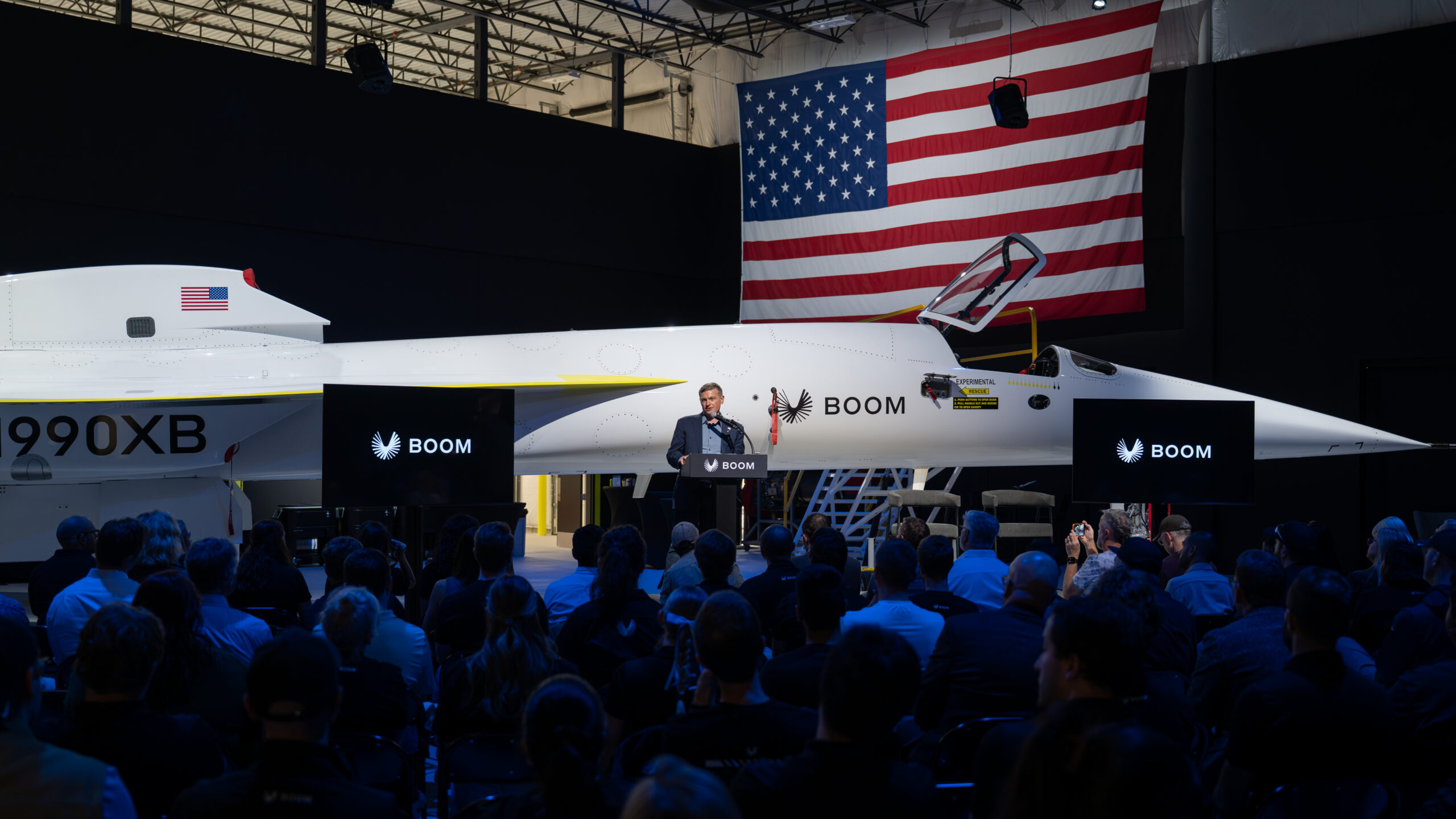
Boom's Supersonic Airliner Project Faces Uncertainty Amid Shift to AI Data Centers

Edited by Sable Maranth
Regulation & Business · Updated November 1, 2026
Boom Supersonic's plans for a supersonic airliner are in jeopardy as United Airlines' CEO expresses doubts about the aircraft's readiness by 2029. Additionally, the company has lost a customer for its data center power business, signaling a potential shift in focus away from aviation.
Sources reviewed
1
Linked below for direct verification.
Official sources
0
Preferred when available.
Review status
Human reviewed
AI-assisted draft, editor-approved publish.
Confidence
High confidence
85/100 from the draft pipeline.
This AI Signal brief is meant to save busy builders time: what changed, why it matters, and where the reporting comes from.
This story appears to rely mostly on secondary or mixed-source reporting, so readers should treat it as a developing summary rather than a final word. If you spot an issue, email [email protected] or read our editorial standards.
Share this story
Why it matters
- ✓Developers in the aviation sector may need to reassess project timelines and expectations for supersonic travel advancements.
- ✓Builders and product teams focused on data center infrastructure may find new opportunities in AI-driven solutions as Boom pivots its business model.
- ✓Operators in the airline industry should stay informed about potential delays in supersonic travel, which could impact market dynamics and competition.
Boom's Supersonic Airliner Project Faces Uncertainty Amid Shift to AI Data Centers
Boom Supersonic, the company behind the ambitious plans for a supersonic airliner, is facing significant challenges as its future in aviation appears increasingly uncertain. United Airlines' CEO has publicly expressed skepticism regarding the aircraft's readiness by the projected timeline of 2029. Compounding these issues, Boom has also lost a customer for its data center power business, indicating a strategic shift that could impact its focus on aviation.
What happened
According to an article from Ars Technica, United Airlines' CEO has voiced doubts about Boom Supersonic's ability to deliver its airliner on schedule. This skepticism raises questions about the viability of the project, which has been touted as a revolutionary advancement in air travel. Furthermore, Boom's pivot towards powering AI data centers has resulted in the loss of a customer, suggesting that the company may be reallocating resources and attention away from its original aviation goals.
Why it matters
The implications of these developments are significant for various stakeholders:
- Developers in the aviation sector may need to reassess their project timelines and expectations regarding advancements in supersonic travel. The uncertainty surrounding Boom's airliner could lead to delays in related technological developments and partnerships.
- Builders and product teams focused on data center infrastructure may find new opportunities as Boom shifts its business model towards AI-driven solutions. This pivot could open avenues for collaboration and innovation in the data center space, particularly as demand for AI capabilities grows.
- Operators in the airline industry should remain vigilant about potential delays in the rollout of supersonic travel, which could impact market dynamics and competition. Understanding these shifts will be crucial for strategic planning and investment decisions.
Context and caveats
Boom Supersonic has positioned itself as a leader in the development of supersonic travel, aiming to reduce flight times significantly. However, the skepticism from United Airlines' CEO highlights the challenges the company faces in meeting its ambitious timelines. The loss of a customer in the data center sector further complicates Boom's situation, suggesting that its diversification strategy may not be yielding the expected results.
While the sourcing for this news is limited to a single article from Ars Technica, the implications are clear. The aviation industry is at a crossroads, and Boom's ability to navigate these challenges will be critical to its future success.
What to watch next
As Boom navigates these uncertainties, stakeholders should keep an eye on several key developments:
- Updates from Boom Supersonic regarding the status of its supersonic airliner project and any new partnerships or contracts that may emerge in the coming months.
- Trends in the AI data center market, particularly how Boom's shift in focus may influence competition and innovation in that space.
- Responses from other airlines regarding their interest in supersonic travel and how they may adapt their strategies in light of Boom's challenges.
In conclusion, the future of Boom Supersonic's airliner project is now clouded with uncertainty, and its strategic shift towards AI data centers could redefine its role in the aviation and technology sectors. Stakeholders must remain informed and agile as these developments unfold.
Sources
Newsletter
Weekly AI signal. No spam.
More in Business

Apple CEO Emphasizes Purposeful AI Development
Apple's CEO has articulated the company's stance on artificial intelligence, stating that they do…
7h ago

OpenAI Lowers Funding Target for New Round
OpenAI has reportedly reduced its funding target for its latest investment round, indicating that…
13h ago

Concerns Grow Over Sustainability of AI Spending Boom
Big Tech companies are investing heavily in AI infrastructure, but emerging financial challenges…
19h ago

Meta's Muse AI: Potential Disruption for Businesses Yet to Materialize
Meta's Muse AI has been positioned as a transformative tool for various industries, yet companies…
19h ago
Comments
Sign in to join the discussion
Loading comments…