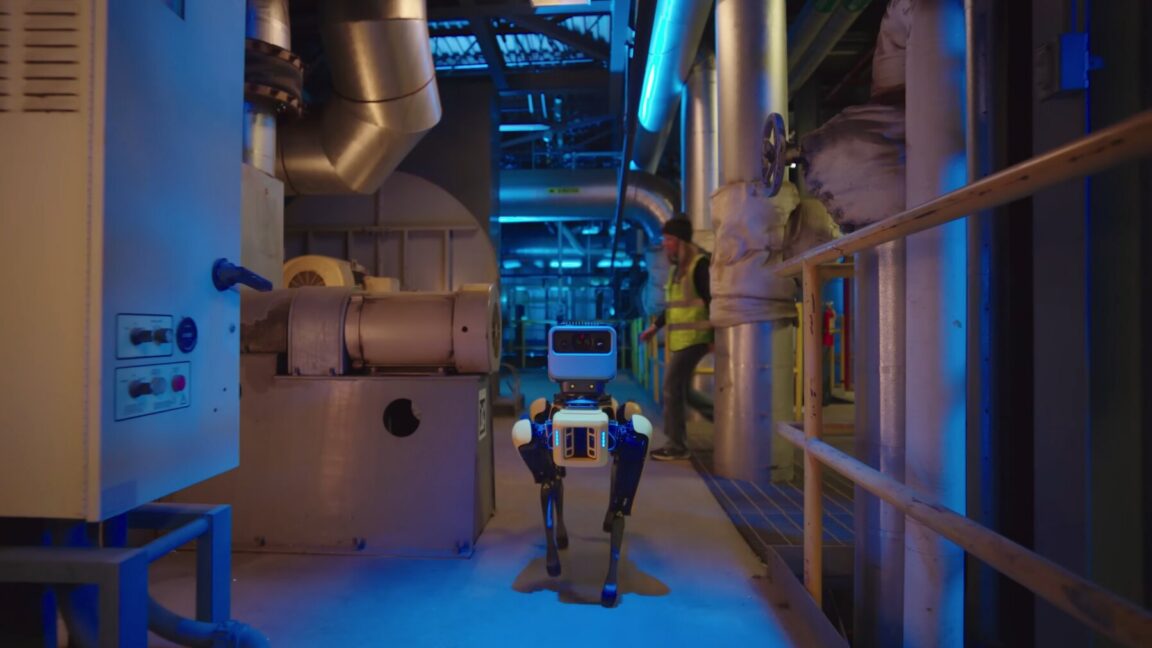
Boston Dynamics’ Robot Dog Now Reads Gauges and Thermometers with Google's AI

Edited by Orin Codewell
Tools & Coding · Updated April 16, 2026
Boston Dynamics has integrated Google's AI technology into its robot dog, enabling it to read gauges and thermometers during inspections of industrial facilities. This advancement enhances the robot's capabilities, allowing for more efficient monitoring of critical parameters in various environments.
Sources reviewed
1
Linked below for direct verification.
Official sources
0
Preferred when available.
Review status
Human reviewed
AI-assisted draft, editor-approved publish.
Confidence
High confidence
90/100 from the draft pipeline.
This AI Signal brief is meant to save busy builders time: what changed, why it matters, and where the reporting comes from.
This story appears to rely mostly on secondary or mixed-source reporting, so readers should treat it as a developing summary rather than a final word. If you spot an issue, email [email protected] or read our editorial standards.
Share this story
Why it matters
- ✓Developers can leverage this technology to create more intelligent robotic systems that can autonomously perform inspections and data collection in industrial settings.
- ✓Builders and operators can expect improved efficiency and accuracy in monitoring equipment, potentially reducing downtime and maintenance costs.
- ✓Product teams can explore new applications for AI in robotics, leading to innovative solutions in automation and data analysis.
Boston Dynamics’ Robot Dog Now Reads Gauges and Thermometers with Google's AI
Boston Dynamics has made a significant advancement in robotic technology by integrating Google's AI capabilities into its robot dog. This enhancement allows the robot to read gauges and thermometers, which is particularly useful for inspecting industrial facilities. The development marks a notable step forward in the application of AI in robotics, enabling more efficient and accurate monitoring of critical parameters in various environments.
What happened
According to a report by Ars Technica, Boston Dynamics' robot dog can now utilize Google's AI to interpret readings from gauges and thermometers. This functionality is designed to assist in the inspection of industrial facilities, where monitoring equipment and environmental conditions is crucial. The integration of AI allows the robot to not only navigate complex environments but also to gather and interpret data autonomously, enhancing its utility in real-world applications.
Why it matters
The introduction of AI capabilities into Boston Dynamics' robot dog has several implications for developers, builders, operators, and product teams:
- Enhanced Robotic Intelligence: Developers can utilize this technology to create more sophisticated robotic systems that can perform inspections and data collection autonomously. This could lead to the development of robots that are capable of handling a wider range of tasks in various industries.
- Improved Operational Efficiency: Builders and operators can expect increased efficiency and accuracy in monitoring equipment. The ability to read gauges and thermometers means that potential issues can be identified and addressed more quickly, reducing downtime and maintenance costs.
- New Applications for AI in Robotics: Product teams can explore innovative applications for AI in robotics, leading to new solutions in automation and data analysis. This could open up new markets and opportunities for businesses that leverage these technologies.
Context and caveats
While the integration of Google's AI into Boston Dynamics' robot dog represents a significant advancement, it is essential to consider the broader context of AI in robotics. The effectiveness of this technology will depend on various factors, including the specific environments in which the robots are deployed and the complexity of the tasks they are required to perform. Furthermore, the sourcing for this information is limited to a single report, so further validation from additional sources would be beneficial to fully understand the implications of this development.
What to watch next
As Boston Dynamics continues to innovate in the field of robotics, it will be important to monitor how this technology evolves and is adopted across different industries. Key areas to watch include:
- Real-World Applications: Observing how companies implement these robotic systems in their operations will provide insights into the practical benefits and challenges of using AI in robotics.
- Technological Advancements: Future updates from Boston Dynamics regarding enhancements to their robots will be crucial in understanding the trajectory of robotics and AI integration.
- Market Response: The reaction from industries that could benefit from this technology will indicate the potential for widespread adoption and the development of new applications.
In conclusion, the integration of Google's AI into Boston Dynamics' robot dog represents a promising advancement in robotics, with the potential to significantly impact various industries. As this technology continues to develop, it will be essential for stakeholders to stay informed about its capabilities and applications.
Sources
Newsletter
Weekly AI signal. No spam.
More in Tools

Vercel Launches Jev, Its Fastest-Adopted AI Model
Vercel has introduced Jev, marking it as the fastest-adopted AI model in the company's history.…
21h ago
Benefit Street Partners Enhances Efficiency with Codex
Benefit Street Partners has implemented OpenAI's Codex to streamline their processes in loan…
1d ago
Stack Overflow for Agents Sees Triple Signups with ChatGPT Plugin
Stack Overflow for Agents has experienced a significant increase in user signups, tripling the…
1d ago

Nvidia Launches RTX Spark N1X Processor in New Laptops
Nvidia has introduced its RTX Spark N1X processor, a powerful Arm-based SoC designed for laptops…
1d ago
Comments
Sign in to join the discussion
Loading comments…