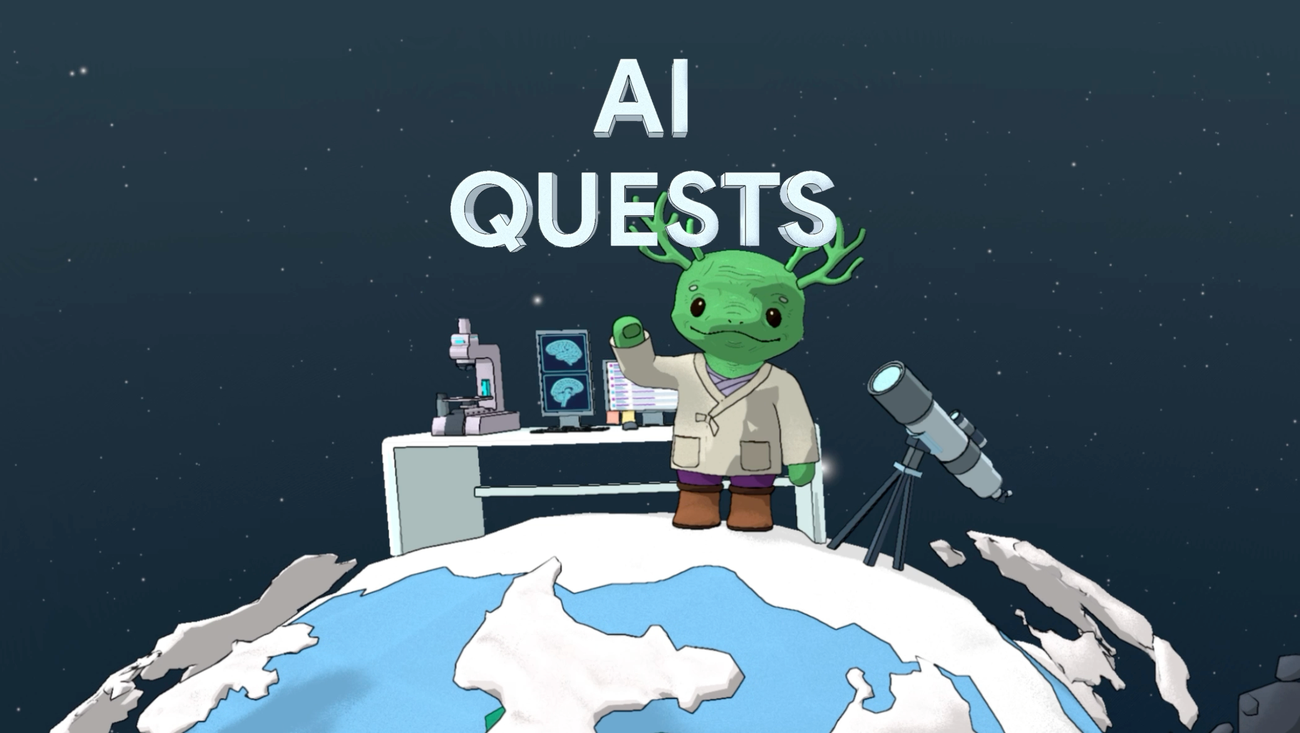
Google AI Launches New AI Quest on Neuroscience

Edited by Lyra Voxley
Models & Research · Updated October 26, 2026
Google AI has introduced a new educational module titled 'Polar Peaks', focusing on neuroscience and the mapping of the human brain. This initiative aims to enhance AI literacy by providing developers and product teams with insights into how AI can intersect with neuroscience. The lesson is part of Google's broader effort to make AI concepts more accessible to a wider audience.
Sources reviewed
1
Linked below for direct verification.
Official sources
1
Preferred when available.
Review status
Human reviewed
AI-assisted draft, editor-approved publish.
Confidence
High confidence
90/100 from the draft pipeline.
This AI Signal brief is meant to save busy builders time: what changed, why it matters, and where the reporting comes from.
When official material exists, we bias toward it over reactions and reposts. If you spot an issue, email [email protected] or read our editorial standards.
Share this story
Why it matters
- ✓Developers can gain a deeper understanding of neuroscience principles, which may inform the design of AI models that mimic human cognitive processes.
- ✓Product teams can leverage insights from the module to create applications that better understand human behavior, enhancing user experience.
- ✓The initiative promotes interdisciplinary knowledge, encouraging collaboration between AI practitioners and neuroscientists.
Google AI Launches New AI Quest on Neuroscience
Google AI has recently unveiled a new educational module titled 'Polar Peaks', aimed at enhancing AI literacy through the lens of neuroscience. This initiative is designed to help developers, builders, operators, and product teams understand the complexities of the human brain and how these insights can be applied in AI development.
What Happened
The 'Polar Peaks' lesson is part of Google's ongoing efforts to make AI concepts more accessible. By focusing on neuroscience, this module provides a unique perspective on how AI can be informed by the workings of the human brain. The initiative is expected to attract a diverse audience, from AI enthusiasts to professionals looking to deepen their understanding of the intersection between AI and neuroscience.
Why It Matters
The introduction of the 'Polar Peaks' module has several implications for the tech community:
- Enhanced Understanding of Neuroscience: Developers can gain insights into how the brain processes information, which could influence the design of AI models that better mimic human cognitive functions.
- Improved User Experience: Product teams can utilize knowledge from the module to create applications that are more attuned to human behavior, potentially leading to more intuitive user interfaces and experiences.
- Interdisciplinary Collaboration: The initiative encourages collaboration between AI practitioners and neuroscientists, fostering innovation at the intersection of these fields.
Context and Caveats
While the 'Polar Peaks' module is a step forward in promoting AI literacy, it is important to note that the sourcing for this information is limited to the Google AI Blog. As such, further details about the content of the module and its practical applications may be forthcoming as more users engage with the material.
What to Watch Next
As the 'Polar Peaks' module gains traction, it will be interesting to observe:
- The feedback from developers and product teams on the practical applications of the insights gained from the module.
- Any subsequent educational initiatives from Google AI that further explore the intersection of AI and other scientific disciplines.
- Potential collaborations or projects that arise from the increased understanding of neuroscience within the AI community.
In conclusion, Google's 'Polar Peaks' module represents a significant effort to bridge the gap between AI and neuroscience, providing valuable resources for those looking to enhance their understanding of both fields. As the tech landscape continues to evolve, initiatives like this will play a crucial role in shaping the future of AI development.
Sources
- Our newest AI Quest: Mapping the human brain — Google AI Blog
Newsletter
Weekly AI signal. No spam.
More in Research

Microsoft AI Outperforms Doctors in Diagnosing Hard Cases, Says Mustafa Suleyman
Microsoft's AI diagnostic system has been shown to outperform generalist doctors in diagnosing…
1d ago

Grok's AI Model Favors Republicans, OpenAI's GPT Leans Democratic
A recent study revealed that Grok's AI model predominantly recommends Republican candidates, while…
2d ago
OpenAI Partners with Poland’s NASK to Enhance AI Safety and Security
OpenAI has announced a partnership with Poland's National Research Institute of Telecommunications…
3d ago

MIT Researchers Observe AI Agents Creating Games on a Virtual Island
In a recent experiment, MIT researchers placed 13 AI agents on a virtual island with no tasks,…
3d ago
Comments
Sign in to join the discussion
Loading comments…