Google Introduces AI Mode for Travel Planning in Search

Edited by Orin Codewell
Tools & Coding · Updated August 31, 2026
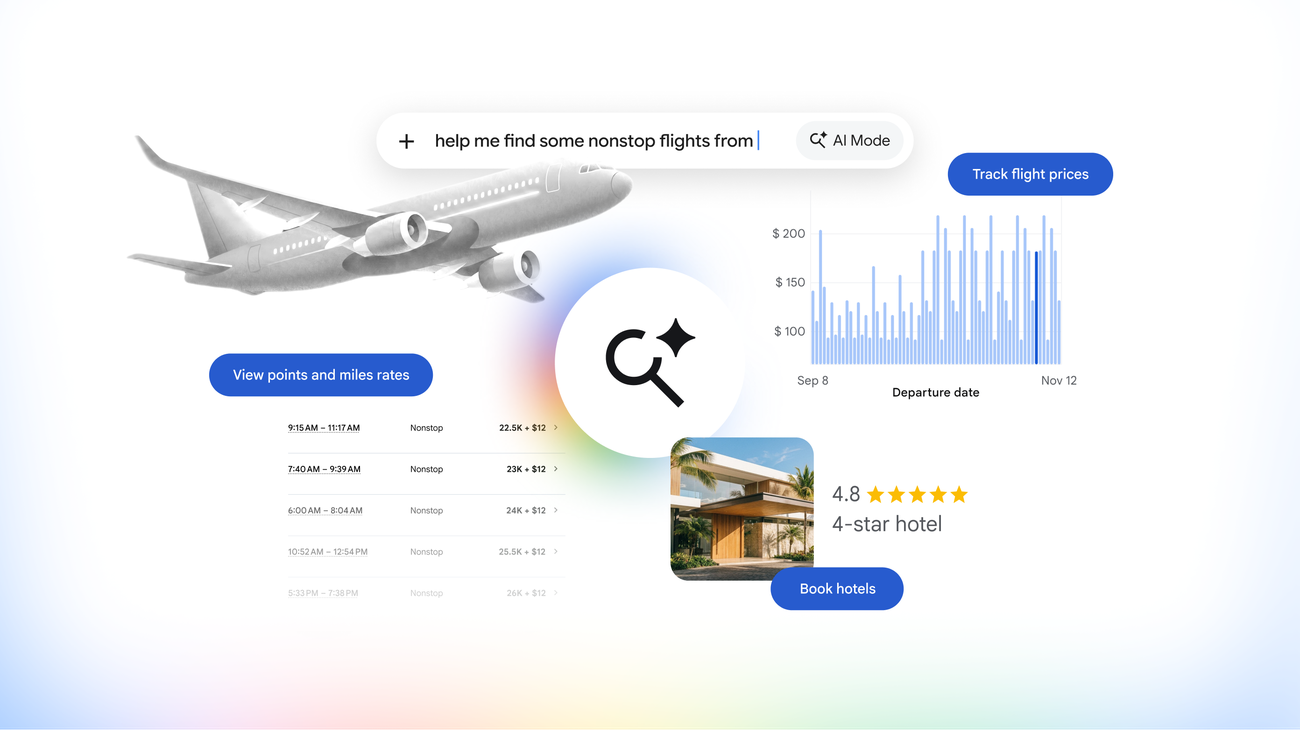
Google has launched new features in Search that enhance travel planning and booking. Users can now book hotels, track airfares, and view miles and rewards using the newly introduced AI Mode. This update aims to streamline the travel planning process and provide users with more personalized options.
Sources reviewed
1
Linked below for direct verification.
Official sources
1
Preferred when available.
Review status
Human reviewed
AI-assisted draft, editor-approved publish.
Confidence
High confidence
90/100 from the draft pipeline.
This AI Signal brief is meant to save busy builders time: what changed, why it matters, and where the reporting comes from.
When official material exists, we bias toward it over reactions and reposts. If you spot an issue, email [email protected] or read our editorial standards.
Share this story
Why it matters
- ✓Developers can integrate these AI-driven features into their applications, enhancing user experience in travel-related services.
- ✓Product teams can leverage the new AI capabilities to offer more tailored travel solutions, potentially increasing customer engagement and satisfaction.
- ✓Operators in the travel industry may need to adapt their platforms to align with Google's new features, ensuring compatibility and optimizing visibility in search results.
Google Introduces AI Mode for Travel Planning in Search
Google has recently unveiled new features in its Search platform aimed at enhancing the travel planning and booking experience for users. With the introduction of AI Mode, users can now book hotels, track airfares, and view their miles and rewards all in one place. This update represents a significant shift in how travelers can utilize Google Search to streamline their travel arrangements.
What happened
According to the Google AI Blog, the new AI Mode in Google Search allows users to engage with travel planning in a more intuitive and efficient manner. Users can now easily search for hotels and track airfare prices, making it easier to find the best deals. Additionally, the feature enables users to view their miles and rewards, providing a comprehensive overview of their travel options.
This development is part of Google's broader strategy to enhance user experience by integrating artificial intelligence into everyday tasks. By simplifying the travel booking process, Google aims to make it more accessible for users to plan their trips without having to navigate multiple platforms.
Why it matters
The introduction of AI Mode in Google Search has several implications for developers, builders, operators, and product teams:
- Integration Opportunities: Developers can leverage the new AI-driven features to enhance their own travel-related applications. By integrating these capabilities, they can provide users with a more seamless experience when planning their trips.
- Enhanced User Experience: Product teams can utilize the AI features to offer personalized travel solutions. This could lead to increased customer engagement and satisfaction, as users receive tailored recommendations based on their preferences and travel history.
- Industry Adaptation: Operators in the travel sector may need to adapt their platforms to align with Google's new features. Ensuring compatibility with AI Mode will be essential for maintaining visibility in search results and attracting customers who rely on Google for travel planning.
Context and caveats
While the new features in Google Search represent a significant advancement in travel planning, it is important to note that the sourcing of this information is limited to the Google AI Blog. As such, further details on the functionality and potential limitations of these features may emerge as more users begin to interact with them.
Additionally, the effectiveness of AI Mode will depend on the accuracy of the data it uses, including hotel availability, airfare prices, and rewards information. Users should remain cautious and verify information from multiple sources before making travel decisions based on AI-generated recommendations.
What to watch next
As Google continues to refine its AI capabilities, it will be important to monitor how these features evolve and how they impact the travel industry. Key areas to watch include:
- User Adoption: Observing how quickly users embrace AI Mode in their travel planning will provide insights into its effectiveness and popularity.
- Industry Response: Tracking how travel companies adapt to these changes will be crucial. Companies that successfully integrate with Google's AI features may gain a competitive edge.
- Future Updates: Google is likely to continue enhancing its AI capabilities, so staying informed about new features and improvements will be essential for developers and product teams.
In conclusion, the introduction of AI Mode in Google Search marks a significant step forward in travel planning and booking. By providing users with a more streamlined and personalized experience, Google is setting a new standard for how travel arrangements can be made in the digital age.
Sources
- 3 new ways to plan and book travel in Search — Google AI Blog
Newsletter
Weekly AI signal. No spam.
More in Tools

Vercel Launches Jev, Its Fastest-Adopted AI Model
Vercel has introduced Jev, marking it as the fastest-adopted AI model in the company's history.…
21h ago

Benefit Street Partners Enhances Efficiency with Codex
Benefit Street Partners has implemented OpenAI's Codex to streamline their processes in loan…
1d ago
Stack Overflow for Agents Sees Triple Signups with ChatGPT Plugin
Stack Overflow for Agents has experienced a significant increase in user signups, tripling the…
1d ago

Nvidia Launches RTX Spark N1X Processor in New Laptops
Nvidia has introduced its RTX Spark N1X processor, a powerful Arm-based SoC designed for laptops…
1d ago
Comments
Sign in to join the discussion
Loading comments…