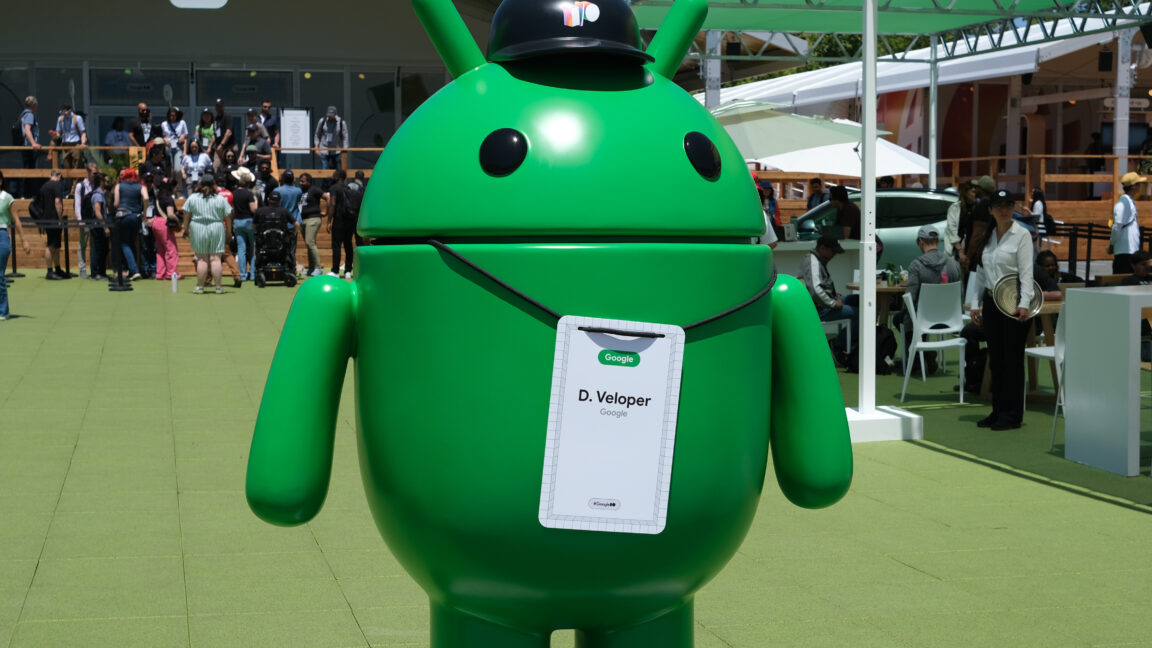
Google Revamps Android Bench with New LLMs, Gemini's Performance Still Lags

Edited by Orin Codewell
Tools & Coding · Updated July 13, 2026
Google has updated its Android Bench benchmarking tool to include new large language models (LLMs), enhancing the capabilities for developers testing AI applications on Android. However, the performance of Gemini, Google's own LLM, continues to fall behind other models like Fable 5. This update aims to provide developers with better resources for evaluating AI performance on mobile devices.
Sources reviewed
1
Linked below for direct verification.
Official sources
0
Preferred when available.
Review status
Human reviewed
AI-assisted draft, editor-approved publish.
Confidence
High confidence
85/100 from the draft pipeline.
This AI Signal brief is meant to save busy builders time: what changed, why it matters, and where the reporting comes from.
This story appears to rely mostly on secondary or mixed-source reporting, so readers should treat it as a developing summary rather than a final word. If you spot an issue, email [email protected] or read our editorial standards.
Share this story
Why it matters
- ✓Developers can now leverage updated benchmarks to assess the performance of their AI applications more accurately, leading to improved app quality.
- ✓The inclusion of new LLMs allows for a broader comparison, enabling teams to make informed decisions about which models to integrate into their products.
- ✓Understanding the performance gaps, particularly with Gemini, can guide developers in choosing alternative LLMs that may offer better efficiency and effectiveness.
Google Revamps Android Bench with New LLMs, Gemini's Performance Still Lags
Google has made significant updates to its Android Bench benchmarking tool, incorporating new large language models (LLMs) to better assist developers in evaluating AI applications on the Android platform. Despite these enhancements, the performance of Gemini, Google's proprietary LLM, remains behind competitors like Fable 5. This news is crucial for developers looking to optimize their AI applications for mobile devices.
What happened
According to a report from Ars Technica, Google has revamped its Android Bench tool, which is designed to benchmark AI performance on Android devices. The update includes the addition of several new LLMs, including Fable 5, providing developers with more options for testing and comparison. However, the report highlights that Gemini, despite being Google's own model, is not performing as well as these newer alternatives.
This update indicates Google's commitment to improving the tools available for developers, allowing them to better assess the capabilities of various AI models in real-world applications. The enhancements to Android Bench are expected to facilitate more accurate performance evaluations, which are essential for developers aiming to create efficient and effective AI-driven applications.
Why it matters
The updates to Android Bench have several concrete implications for developers, builders, operators, and product teams:
- Improved Benchmarking: With the addition of new LLMs, developers can conduct more comprehensive performance assessments of their AI applications, leading to better optimization and user experience.
- Informed Decision-Making: The ability to compare different models, including Fable 5 and others, allows teams to make data-driven decisions about which LLMs to integrate into their products, potentially enhancing application performance.
- Addressing Performance Gaps: The acknowledgment that Gemini lags behind its competitors can guide developers in choosing alternative models that may provide superior results, ensuring that they are not limited by subpar performance in their applications.
Context and caveats
While the updates to Android Bench are a step forward, it is essential to consider the broader context of AI development within the Android ecosystem. The performance of LLMs can vary significantly based on the specific use cases and the types of applications being developed. Additionally, the ongoing evolution of AI models means that performance metrics can change rapidly, necessitating continuous monitoring and adaptation by developers.
Furthermore, the sourcing for this update is limited to a single report from Ars Technica, which, while reputable, may not capture all aspects of the changes or the full range of developer experiences with the updated tool. As such, developers should approach the new benchmarks with a critical eye and consider conducting their own tests to validate the performance of the LLMs in their specific applications.
What to watch next
As Google continues to enhance its AI tools and frameworks, developers should keep an eye on future updates to Android Bench and the performance of Gemini relative to other LLMs. Key areas to watch include:
- Further Updates: Google may release additional updates or improvements to Android Bench, potentially addressing the performance issues associated with Gemini.
- Community Feedback: Developers' experiences and feedback regarding the new benchmarks will be vital in shaping future iterations of the tool.
- Emerging Competitors: The landscape of LLMs is rapidly evolving, and new models may emerge that could further shift the competitive dynamics in AI performance on mobile platforms.
In conclusion, the revamp of Android Bench represents a significant advancement for developers working with AI on Android, providing them with better tools for evaluation and optimization. However, the ongoing challenges with Gemini's performance highlight the need for careful consideration when selecting LLMs for application development.
Sources
- Google updates Android Bench with new LLMs, but Gemini still lags behind — Ars Technica AI
Newsletter
Weekly AI signal. No spam.
More in Tools

Nvidia Launches RTX Spark N1X Processor in New Laptops
Nvidia has introduced its RTX Spark N1X processor, a powerful Arm-based SoC designed for laptops…
3h ago

Granite Switch 4.1 Introduces Integrated Chat, Decision-Making, and Speech Capabilities
Hugging Face has released Granite Switch 4.1, enhancing its capabilities to integrate chat,…
15h ago
Sullivan & Cromwell Launches AI Tool for Agreement Review
Sullivan & Cromwell has partnered with OpenAI to create the Agreement Analyzer, an AI-driven tool…
15h ago

Bluesky Expands AI-Powered Attie App for Website and Game Creation
Bluesky has enhanced its Attie platform, enabling users to create interactive experiences such as…
21h ago
Comments
Sign in to join the discussion
Loading comments…