IBM Launches Granite 4.2 Models Focusing on Local LLMs

Edited by Lyra Voxley
Models & Research · Updated August 26, 2026
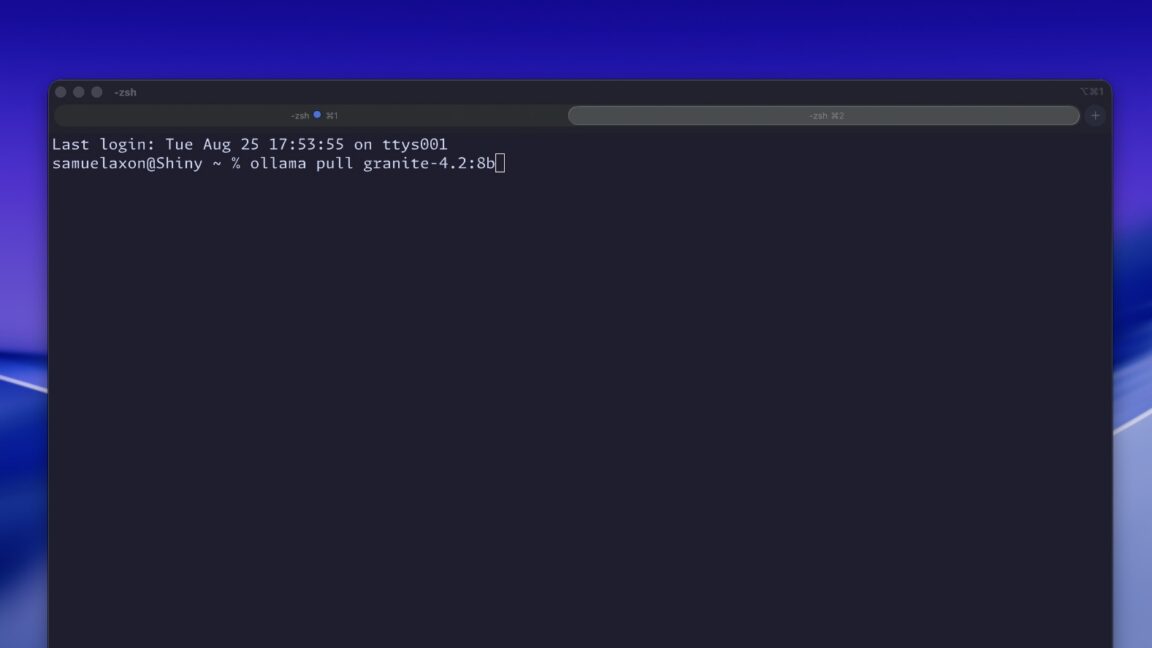
IBM has introduced its Granite 4.2 models, emphasizing agentic capabilities and predictable enterprise deployment. This release aligns with the growing interest in local large language models (LLMs), providing organizations with more control over their AI implementations.
Sources reviewed
1
Linked below for direct verification.
Official sources
0
Preferred when available.
Review status
Human reviewed
AI-assisted draft, editor-approved publish.
Confidence
High confidence
85/100 from the draft pipeline.
This AI Signal brief is meant to save busy builders time: what changed, why it matters, and where the reporting comes from.
This story appears to rely mostly on secondary or mixed-source reporting, so readers should treat it as a developing summary rather than a final word. If you spot an issue, email [email protected] or read our editorial standards.
Share this story
Why it matters
- ✓Developers can leverage the Granite 4.2 models to create more customized AI solutions that operate locally, enhancing data privacy and compliance.
- ✓Product teams can expect improved predictability in deploying AI applications within enterprise environments, reducing the risks associated with cloud-based models.
- ✓The focus on agentic capability allows builders to develop AI systems that can autonomously perform tasks, potentially increasing efficiency and reducing manual intervention.
IBM Launches Granite 4.2 Models Focusing on Local LLMs
IBM has recently unveiled its Granite 4.2 models, which are designed to meet the increasing demand for local large language models (LLMs). This release emphasizes agentic capabilities and aims to provide predictable deployment options for enterprises, marking a significant step in the evolution of AI technologies tailored for business applications.
What happened
The Granite 4.2 models represent IBM's latest advancements in the realm of local LLMs, a sector that has garnered considerable attention as organizations seek to maintain greater control over their AI systems. By focusing on agentic capabilities, these models are designed to operate autonomously, allowing them to perform tasks without constant human oversight. This feature is particularly beneficial for enterprises looking to streamline operations and enhance productivity.
The emphasis on predictable deployment means that businesses can integrate these models into their existing infrastructures with more confidence, reducing the uncertainties often associated with deploying AI solutions. This is crucial for organizations that prioritize compliance and data security, as local models can help mitigate risks associated with cloud-based data storage and processing.
Why it matters
The introduction of Granite 4.2 models has several implications for developers, builders, and product teams:
- Enhanced Customization: Developers can utilize the Granite 4.2 models to create tailored AI solutions that operate locally, allowing for greater customization and control over the AI's functionalities.
- Predictable Deployments: Product teams can expect a more straightforward integration process for AI applications, as the predictable deployment features of Granite 4.2 reduce the complexities often encountered with cloud-based models.
- Increased Efficiency: The agentic capabilities of the models enable builders to develop systems that can autonomously manage tasks, which can lead to significant efficiency gains and reduced reliance on human intervention.
Context and caveats
The shift towards local LLMs is part of a broader trend in the AI industry, where organizations are increasingly concerned about data privacy, compliance, and the operational risks associated with cloud-based solutions. IBM's Granite 4.2 models are positioned to address these concerns, but the sourcing of information on their specific capabilities and performance metrics remains limited. As such, organizations considering these models should conduct thorough evaluations to ensure they meet their specific needs.
What to watch next
As the interest in local LLMs continues to grow, it will be important to monitor how IBM's Granite 4.2 models perform in real-world applications. Key areas to watch include:
- Adoption Rates: Tracking how quickly organizations adopt Granite 4.2 models will provide insights into their effectiveness and reliability in enterprise settings.
- Performance Metrics: Observing the performance of these models in various applications will help developers and product teams understand their capabilities and limitations.
- Competitive Landscape: As more companies enter the local LLM space, it will be essential to compare IBM's offerings with those of competitors to gauge market trends and innovations.
In conclusion, IBM's Granite 4.2 models represent a significant advancement in local LLM technology, offering enterprises a promising solution for enhancing AI capabilities while maintaining control over their data and operations. As organizations increasingly prioritize data privacy and compliance, these models may play a crucial role in shaping the future of AI deployment in business environments.
Sources
- IBM's new Granite 4.2 models ride the wave of interest in local LLMs — Ars Technica AI
Newsletter
Weekly AI signal. No spam.
More in Models

Hugging Face Launches Welcome Beam: A 501B Open Model for Customization and Scalability
Hugging Face has introduced Welcome Beam, a 501 billion parameter open model that allows users to…
3h ago

Elorian Launches AI Model Capable of Reasoning with Images
Elorian has introduced its first AI model, Glimpse, which aims to reason with images rather than…
21h ago

The AI Race Intensifies as Google and Meta Unveil New Models
The competitive landscape of AI development has shifted dramatically as Google and Meta have…
2d ago

Google Releases Gemini 4 Argon Model
Google has officially launched its Gemini 4 Argon model after months of anticipation. The company…
4d ago
Comments
Sign in to join the discussion
Loading comments…