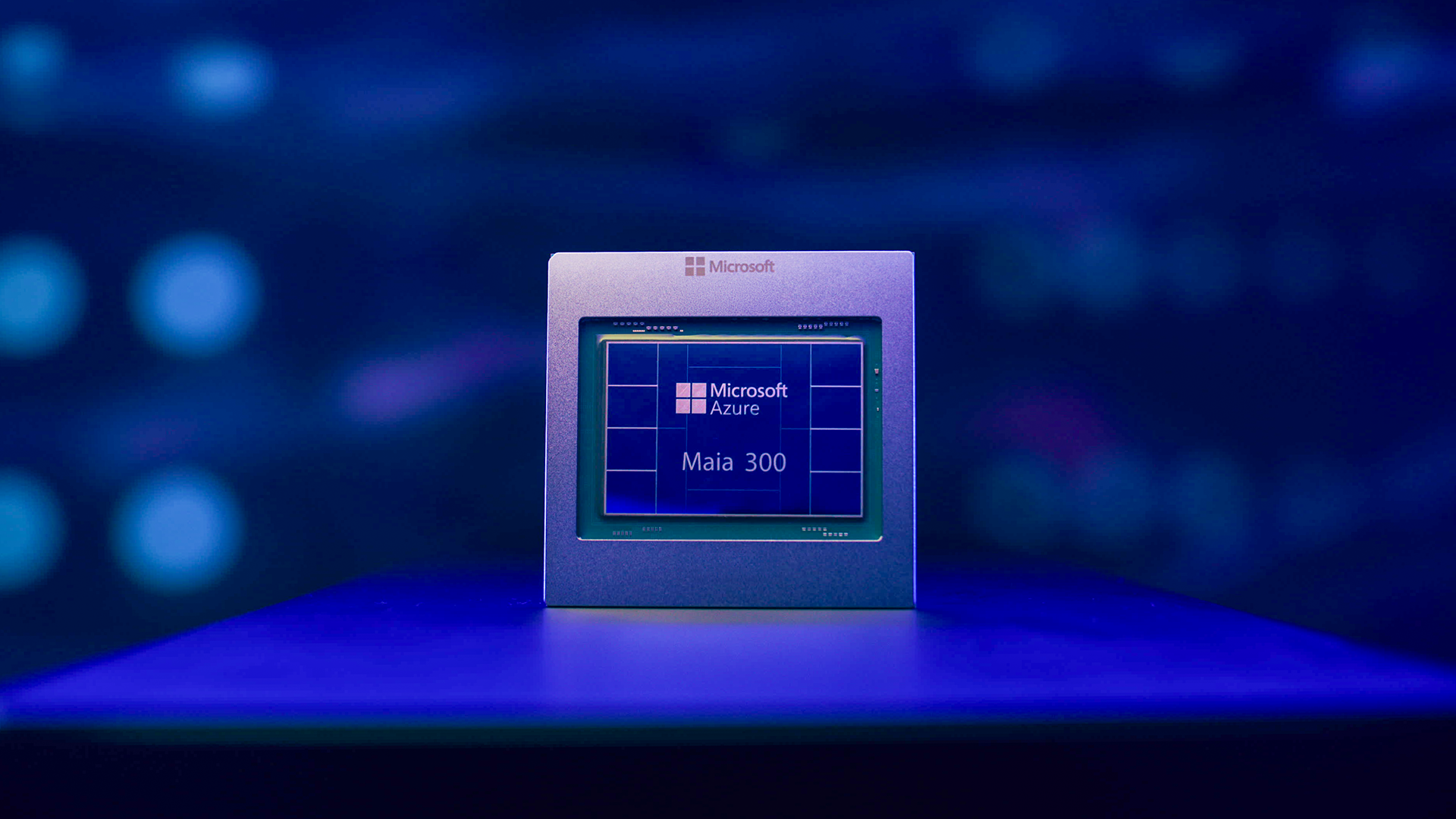
Microsoft Unveils Custom Chip: Maia 300

Edited by Orin Codewell
Tools & Coding · Updated October 12, 2026
Microsoft has introduced its latest custom chip, the Maia 300, designed to enhance AI capabilities across its product offerings. This new chip aims to improve performance and efficiency for developers and product teams working with AI applications. The Maia 300 is expected to play a significant role in advancing Microsoft's AI infrastructure.
Sources reviewed
1
Linked below for direct verification.
Official sources
1
Preferred when available.
Review status
Human reviewed
AI-assisted draft, editor-approved publish.
Confidence
High confidence
85/100 from the draft pipeline.
This AI Signal brief is meant to save busy builders time: what changed, why it matters, and where the reporting comes from.
When official material exists, we bias toward it over reactions and reposts. If you spot an issue, email [email protected] or read our editorial standards.
Share this story
Why it matters
- ✓The Maia 300 chip is optimized for AI workloads, which can lead to faster processing times and improved performance for applications that rely on machine learning and data analysis.
- ✓Developers can leverage the enhanced capabilities of the Maia 300 to build more complex AI models and applications, potentially reducing development time and costs.
- ✓Product teams can expect better integration of AI features in Microsoft products, allowing for more innovative solutions and improved user experiences.
Microsoft Unveils Custom Chip: Maia 300
Microsoft has announced the launch of its latest custom chip, the Maia 300, aimed at enhancing its AI capabilities. This new chip is designed to improve performance and efficiency for developers and product teams working with AI applications, marking a significant step forward in Microsoft's ongoing investment in artificial intelligence technology.
What Happened
The Maia 300 chip was introduced as part of Microsoft's strategy to bolster its AI infrastructure. This custom chip is expected to provide substantial improvements in processing power and efficiency, particularly for AI workloads. By tailoring the chip specifically for AI applications, Microsoft aims to optimize performance across its product offerings, which could lead to faster and more efficient AI solutions.
Why It Matters
The introduction of the Maia 300 chip has several implications for developers, builders, and product teams:
- Optimized Performance for AI Workloads: The Maia 300 chip is specifically designed to handle AI tasks, which means that applications relying on machine learning and data analysis can expect faster processing times and improved overall performance.
- Enhanced Development Capabilities: Developers can take advantage of the Maia 300's capabilities to create more complex AI models and applications. This could lead to reduced development time and costs, allowing teams to innovate more rapidly.
- Improved Integration of AI Features: Product teams can anticipate better integration of AI functionalities in Microsoft products. This enhancement can lead to more innovative solutions and a better user experience, as AI becomes more seamlessly embedded in everyday applications.
Context and Caveats
While the announcement of the Maia 300 is promising, details regarding its specific technical specifications and performance benchmarks are limited. The impact of the chip will depend on how effectively it is adopted across Microsoft's product ecosystem and how developers leverage its capabilities in real-world applications. As the AI landscape continues to evolve, the success of the Maia 300 will also depend on competition from other tech companies investing in similar technologies.
What to Watch Next
As Microsoft rolls out the Maia 300, it will be important to monitor:
- Performance Benchmarks: Look for detailed performance metrics and comparisons with existing chips in the market to understand the true capabilities of the Maia 300.
- Developer Adoption: Observing how quickly and effectively developers adopt the Maia 300 in their projects will provide insights into its practical utility.
- Integration in Microsoft Products: Keep an eye on upcoming updates to Microsoft products that utilize the Maia 300, as this will showcase the chip's impact on user experience and functionality.
In conclusion, the Maia 300 represents a significant advancement in Microsoft's AI strategy, with the potential to enhance the capabilities of developers and product teams. As more information becomes available, the industry will be watching closely to see how this new technology shapes the future of AI applications.
Sources
- Introducing Microsoft’s latest custom chip: Maia 300 — Microsoft AI Blog
More in Tools

Google Launches AI Edge Foresight App to Compete with Granola
Google has introduced a new app called AI Edge Foresight, designed to compete with Granola by…
7h ago

Oracle Accelerates Workflows with ChatGPT and Codex Integration
Oracle has successfully integrated ChatGPT Work and Codex into its operations, significantly…
13h ago

Anthropic Introduces Free AI Security Scans for Open-Source Projects
Anthropic has launched a new service called OSS Scanner, designed to help open-source projects…
13h ago

Hugging Face Introduces Custom Model Creation for Developers
Hugging Face has unveiled a new feature that allows developers to create their own machine learning…
1d ago
Comments
Sign in to join the discussion
Loading comments…