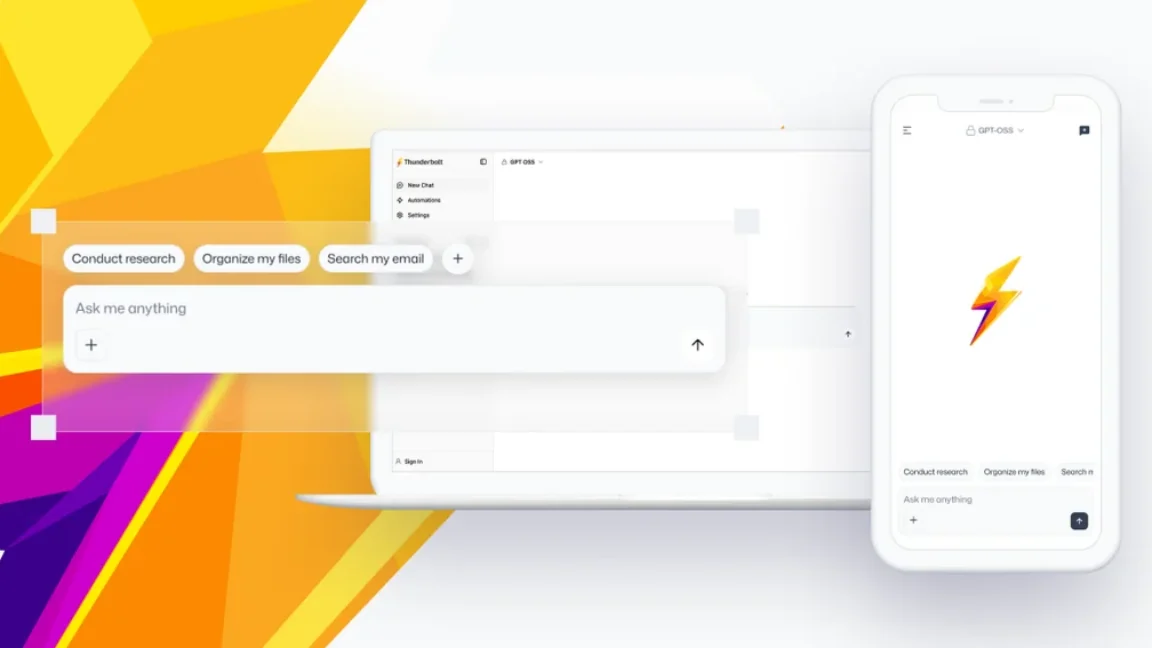
Mozilla Launches Thunderbolt AI Client with Self-Hosted Infrastructure Focus

Edited by Orin Codewell
Tools & Coding · Updated April 17, 2026
Mozilla has introduced the Thunderbolt AI client, which emphasizes a self-hosted infrastructure aimed at fostering a decentralized open-source AI ecosystem. This new tool builds upon deepset's Haystack framework, providing developers with enhanced capabilities for AI deployment. The initiative reflects Mozilla's commitment to open-source principles in the rapidly evolving AI landscape.
Sources reviewed
1
Linked below for direct verification.
Official sources
0
Preferred when available.
Review status
Human reviewed
AI-assisted draft, editor-approved publish.
Confidence
High confidence
90/100 from the draft pipeline.
This AI Signal brief is meant to save busy builders time: what changed, why it matters, and where the reporting comes from.
This story appears to rely mostly on secondary or mixed-source reporting, so readers should treat it as a developing summary rather than a final word. If you spot an issue, email [email protected] or read our editorial standards.
Share this story
Why it matters
- ✓Developers can leverage Thunderbolt to create AI applications that prioritize user privacy and data sovereignty through self-hosted solutions.
- ✓The integration with deepset's Haystack allows for more efficient and scalable AI model management, which can streamline development processes.
- ✓Product teams can benefit from the open-source nature of Thunderbolt, enabling customization and flexibility in AI deployments without vendor lock-in.
Mozilla Launches Thunderbolt AI Client with Self-Hosted Infrastructure Focus
Mozilla has recently launched the Thunderbolt AI client, a new tool designed to enhance the development of AI applications with a strong emphasis on self-hosted infrastructure. This initiative aims to promote a decentralized open-source AI ecosystem, building on the capabilities of deepset's Haystack framework. The introduction of Thunderbolt signifies Mozilla's ongoing commitment to open-source principles in the AI domain, providing developers with the tools they need to create robust and privacy-focused AI solutions.
What Happened
The Thunderbolt AI client was unveiled as part of Mozilla's strategy to support developers in creating AI applications that can be hosted on their own infrastructure. By focusing on self-hosting, Mozilla aims to address growing concerns around data privacy and security, allowing users to maintain control over their data. This new tool is built upon deepset's Haystack, which is known for its capabilities in managing AI models and facilitating efficient AI application development.
Why It Matters
The launch of Thunderbolt has several implications for developers, builders, operators, and product teams:
- Enhanced Privacy and Data Control: Developers can utilize Thunderbolt to create AI applications that prioritize user privacy by allowing data to be stored and processed locally, reducing reliance on external servers.
- Streamlined Development Processes: The integration with Haystack enables developers to manage AI models more effectively, which can lead to faster development cycles and improved scalability for AI applications.
- Flexibility and Customization: As an open-source tool, Thunderbolt allows product teams to customize their AI solutions according to specific needs, avoiding vendor lock-in and fostering innovation in AI deployment.
Context and Caveats
The move towards self-hosted AI solutions is part of a broader trend in the tech industry, where concerns about data privacy and security are becoming increasingly prominent. Mozilla's focus on open-source tools aligns with its mission to promote a more accessible and user-centric internet. However, the success of Thunderbolt will depend on its adoption by the developer community and the extent to which it can compete with existing proprietary solutions.
While the initial announcement provides a framework for understanding Thunderbolt's capabilities, detailed documentation and community support will be crucial for its widespread adoption. As of now, the information available is limited, and further insights will likely emerge as developers begin to experiment with the tool.
What to Watch Next
As Mozilla rolls out the Thunderbolt AI client, it will be important to monitor:
- Community Engagement: How developers respond to and engage with the Thunderbolt tool will be a key indicator of its potential success.
- Updates and Features: Future updates to Thunderbolt, including additional features or integrations, will shape its utility and adoption in the AI ecosystem.
- Competitive Landscape: Observing how Thunderbolt positions itself against existing AI tools and platforms will provide insights into its market viability and impact on the industry.
In conclusion, Mozilla's Thunderbolt AI client represents a significant step towards empowering developers with tools that prioritize privacy and decentralization. As the AI landscape continues to evolve, Thunderbolt could play a pivotal role in shaping the future of open-source AI applications.
Sources
Newsletter
Weekly AI signal. No spam.
More in Tools

Vercel Launches Jev, Its Fastest-Adopted AI Model
Vercel has introduced Jev, marking it as the fastest-adopted AI model in the company's history.…
21h ago
Benefit Street Partners Enhances Efficiency with Codex
Benefit Street Partners has implemented OpenAI's Codex to streamline their processes in loan…
1d ago
Stack Overflow for Agents Sees Triple Signups with ChatGPT Plugin
Stack Overflow for Agents has experienced a significant increase in user signups, tripling the…
1d ago

Nvidia Launches RTX Spark N1X Processor in New Laptops
Nvidia has introduced its RTX Spark N1X processor, a powerful Arm-based SoC designed for laptops…
1d ago
Comments
Sign in to join the discussion
Loading comments…