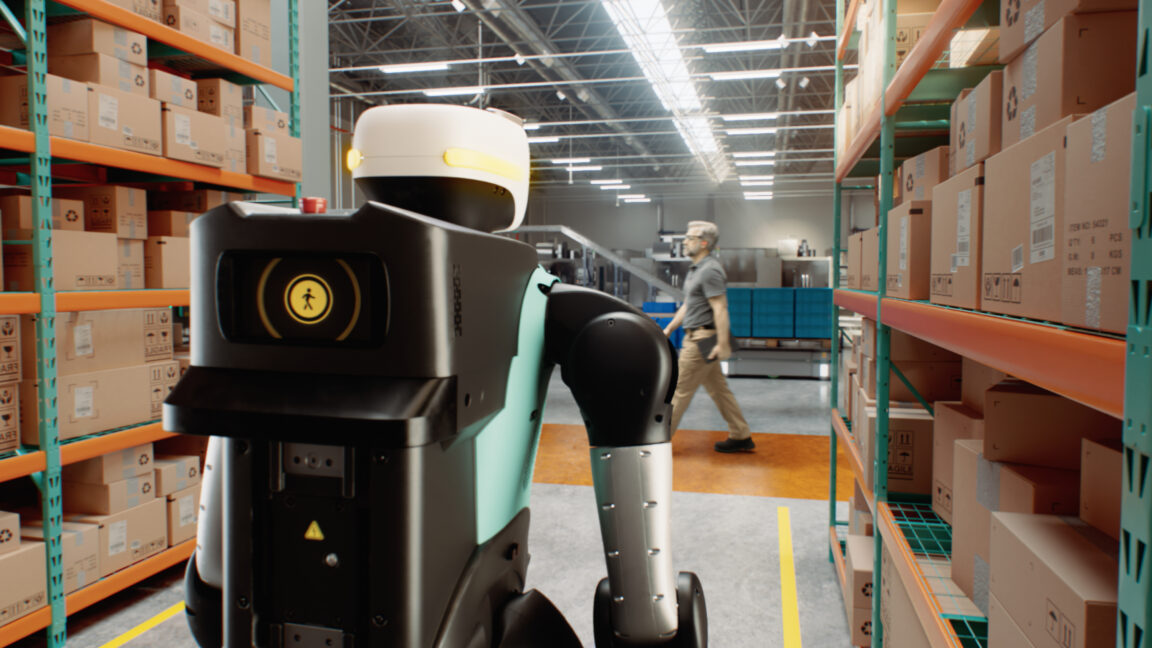
Nvidia Advances Physical AI for Enhanced Safety in Robotics

Edited by Orin Codewell
Tools & Coding · Updated October 8, 2026
Nvidia has announced a comprehensive safety solution for physical AI, which is being adopted by various robotics companies to enhance the safety of robotaxis and humanoid robots. This initiative aims to improve the reliability and operational safety of autonomous systems in real-world environments, addressing critical challenges in the deployment of such technologies.
Sources reviewed
1
Linked below for direct verification.
Official sources
0
Preferred when available.
Review status
Human reviewed
AI-assisted draft, editor-approved publish.
Confidence
High confidence
90/100 from the draft pipeline.
This AI Signal brief is meant to save busy builders time: what changed, why it matters, and where the reporting comes from.
This story appears to rely mostly on secondary or mixed-source reporting, so readers should treat it as a developing summary rather than a final word. If you spot an issue, email [email protected] or read our editorial standards.
Share this story
Why it matters
- ✓Developers can leverage Nvidia's full-stack safety solutions to integrate advanced safety features into their robotic applications, potentially reducing development time and increasing reliability.
- ✓Builders of autonomous vehicles and humanoid robots can enhance their product offerings by utilizing Nvidia's technology, which may lead to increased market competitiveness.
- ✓Operators of robotaxi services can expect improved safety metrics, which could lead to higher consumer trust and adoption rates in autonomous transportation.
Nvidia Advances Physical AI for Enhanced Safety in Robotics
Nvidia has recently made a significant move in the realm of physical AI by introducing a comprehensive safety solution aimed at enhancing the reliability of robotaxis and humanoid robots. This initiative is crucial as it addresses the pressing need for improved safety measures in the deployment of autonomous systems, which are increasingly being integrated into everyday environments.
What happened
According to a report from Ars Technica, Nvidia's new full-stack safety solution is designed to be utilized by robotics companies to ensure safer operations of autonomous vehicles and humanoid robots. This development marks a pivotal moment in the evolution of physical AI, as it not only focuses on the technological capabilities of robots but also emphasizes the importance of safety in their deployment.
Nvidia's approach involves a holistic view of safety, integrating various components and technologies to create a robust framework that can be applied across different robotic applications. This is particularly relevant for industries that are on the verge of deploying autonomous systems in public spaces, where safety is a paramount concern.
Why it matters
The introduction of Nvidia's safety solution has several implications for developers, builders, and operators in the robotics field:
- Enhanced Development Efficiency: Developers can utilize Nvidia's full-stack safety solutions to incorporate advanced safety features into their robotic applications. This can streamline the development process, allowing teams to focus on innovation while relying on proven safety protocols.
- Competitive Advantage for Builders: Companies that build autonomous vehicles and humanoid robots can enhance their product offerings by integrating Nvidia's technology. This could lead to a stronger market position as safety becomes a key differentiator in consumer choice.
- Increased Consumer Trust for Operators: Operators of robotaxi services can expect to see improved safety metrics as a result of implementing Nvidia's solutions. This could foster greater consumer trust and potentially lead to higher adoption rates of autonomous transportation services.
Context and caveats
While Nvidia's advancements in physical AI are promising, it is important to consider the broader context of safety in robotics. The deployment of autonomous systems comes with inherent risks, and while technology can mitigate some of these risks, it cannot eliminate them entirely. The effectiveness of Nvidia's safety solutions will ultimately depend on real-world testing and the ability to adapt to various operational environments.
Additionally, the sourcing for this information is primarily from Ars Technica, which provides a focused perspective on Nvidia's initiatives. As the technology landscape evolves, further insights from additional sources may be necessary to fully understand the implications of these developments.
What to watch next
As Nvidia rolls out its safety solutions, it will be important to monitor how robotics companies implement these technologies in their products. Key areas to watch include:
- Real-World Testing: Observing how these safety solutions perform in real-world scenarios will be critical to assessing their effectiveness and reliability.
- Industry Adoption: Tracking which companies adopt Nvidia's technology and how it impacts their operations will provide insights into the competitive landscape of robotics and autonomous systems.
- Regulatory Responses: As safety becomes a focal point in the deployment of autonomous technologies, regulatory bodies may respond with new guidelines or requirements that could shape the industry.
In conclusion, Nvidia's big bet on physical AI represents a significant step forward in addressing safety challenges in robotics. By providing a comprehensive safety solution, Nvidia is positioning itself as a key player in the future of autonomous systems, paving the way for safer and more reliable robotic applications.
Sources
More in Tools

Open Source Alternatives to Adobe's Creative Cloud Launched by AI Developer
A bold AI developer has introduced open-source alternatives to Adobe's Creative Cloud, branded as…
9h ago

Microsoft Enhances Copilot with Greater Control Over Windows and Local Files
At a recent Windows and Surface event, Microsoft announced an upgrade to its Copilot AI system,…
9h ago
OpenAI Launches GPT-6 with Intelligent UI for Enhanced User Interaction
OpenAI has officially rolled out GPT-6 globally, featuring an Intelligent UI that integrates…
9h ago

Microsoft Unveils New AI-Friendly Hardware and Windows Updates
During a recent event, Microsoft introduced new hardware designed to enhance AI capabilities and…
9h ago
Comments
Sign in to join the discussion
Loading comments…