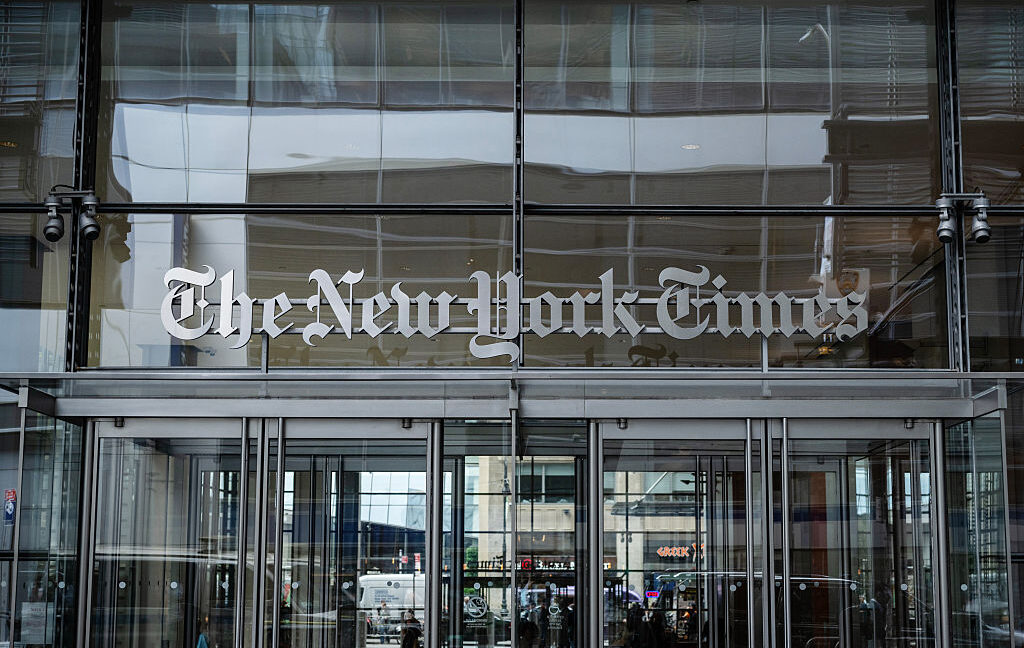
NYT Accuses Microsoft of Enabling Copyright Infringement for OpenAI's Supercomputer

Edited by Sable Maranth
Regulation & Business · Updated June 27, 2026
The New York Times has shifted its stance on copyright claims against Microsoft, alleging that the tech giant's development of a supercomputer for OpenAI facilitates copyright infringement. This change follows a recent Supreme Court ruling that impacts how copyright laws are interpreted in relation to technology companies. The implications of this shift could affect the legal landscape for AI development and usage.
Sources reviewed
1
Linked below for direct verification.
Official sources
0
Preferred when available.
Review status
Human reviewed
AI-assisted draft, editor-approved publish.
Confidence
High confidence
85/100 from the draft pipeline.
This AI Signal brief is meant to save busy builders time: what changed, why it matters, and where the reporting comes from.
This story appears to rely mostly on secondary or mixed-source reporting, so readers should treat it as a developing summary rather than a final word. If you spot an issue, email [email protected] or read our editorial standards.
Share this story
Why it matters
- ✓Developers and product teams may need to reassess their compliance strategies regarding copyright laws as the legal framework evolves following the Supreme Court ruling.
- ✓The allegations against Microsoft could lead to increased scrutiny of AI training data sources, prompting teams to ensure that their datasets are legally sound.
- ✓If the claims lead to legal action, it could create a precedent that affects how AI models are trained and deployed, impacting innovation in the field.
NYT Accuses Microsoft of Enabling Copyright Infringement for OpenAI's Supercomputer
The New York Times (NYT) has recently accused Microsoft of facilitating copyright infringement through its development of a supercomputer intended for OpenAI. This claim marks a significant shift in the NYT's stance on copyright issues related to AI technologies, particularly in light of a recent Supreme Court ruling that has implications for how copyright laws apply to technology companies. Understanding this development is crucial for developers, builders, and product teams involved in AI, as it may reshape the legal landscape in which they operate.
What happened
According to a report by Ars Technica, the NYT's allegations against Microsoft stem from its collaboration with OpenAI, particularly regarding the supercomputer designed to enhance AI capabilities. The NYT's shift in position follows a Supreme Court ruling that has altered the interpretation of copyright laws, especially concerning the use of copyrighted materials in AI training datasets. This change could have far-reaching implications for how AI companies source and utilize data, raising questions about the legality of their practices.
The NYT's claims suggest that Microsoft's supercomputer may be enabling OpenAI to infringe on copyright protections, which could lead to legal challenges not only for Microsoft but also for OpenAI and potentially other AI developers who rely on similar technologies.
Why it matters
The implications of the NYT's allegations are significant for various stakeholders in the AI ecosystem:
- Compliance Strategies: Developers and product teams may need to reassess their compliance strategies regarding copyright laws as the legal framework evolves. The shift in the NYT's stance highlights the need for vigilance in ensuring that AI training data is sourced legally and ethically.
- Scrutiny of Data Sources: The allegations against Microsoft could lead to increased scrutiny of AI training data sources. Teams will need to ensure that their datasets are legally sound and do not infringe on copyright protections, which may require more rigorous vetting processes.
- Legal Precedents: If the claims lead to legal action, it could create a precedent that affects how AI models are trained and deployed. This could impact innovation in the field, as companies may become more cautious in their approach to data usage, potentially stifling creativity and development in AI technologies.
Context and caveats
The NYT's shift in position comes in the wake of a Supreme Court ruling that has significant implications for copyright law. While the specifics of the ruling are not detailed in the source material, it is clear that the legal landscape is changing, and companies involved in AI development must stay informed about these changes. The sourcing for this news is primarily from Ars Technica, which provides a reliable account of the situation but does not delve deeply into the legal intricacies of the Supreme Court ruling itself.
What to watch next
As this situation develops, stakeholders in the AI community should keep an eye on several key areas:
- Legal Developments: Watch for any legal actions that may arise from the NYT's allegations against Microsoft. The outcomes of such cases could set important precedents for the industry.
- Policy Changes: Monitor any changes in policies or regulations regarding copyright and AI that may emerge as a result of this controversy. This could include new guidelines for data sourcing and usage in AI training.
- Industry Reactions: Observe how other companies in the AI space respond to these allegations and whether they take proactive measures to ensure compliance with copyright laws.
In conclusion, the NYT's allegations against Microsoft highlight a critical intersection of technology and copyright law that developers, builders, and product teams must navigate carefully. As the legal landscape evolves, staying informed and compliant will be essential for success in the AI industry.
Sources
Newsletter
Weekly AI signal. No spam.
More in Regulation

Trump Shares AI-Edited Photo of White House Renovations
Former President Donald Trump recently posted an AI-modified image on Truth Social, showcasing…
3h ago
Meta Revises Commercial TOS to Mitigate AI Licensing Costs
Meta has updated its commercial Terms of Service (TOS), which legal experts suggest may be a…
3h ago

Meta's New Terms May Enable Free AI Training on News Sites
Meta has updated its business terms to allow the company to crawl and scrape content from websites…
9h ago

Meta Updates Terms to Address Scraping and AI Training Concerns
Meta has removed specific language from its terms of service that previously raised concerns…
9h ago
Comments
Sign in to join the discussion
Loading comments…