OpenAI Ends Exclusive Partnership with Microsoft

Edited by Sable Maranth
Regulation & Business · Updated April 28, 2026
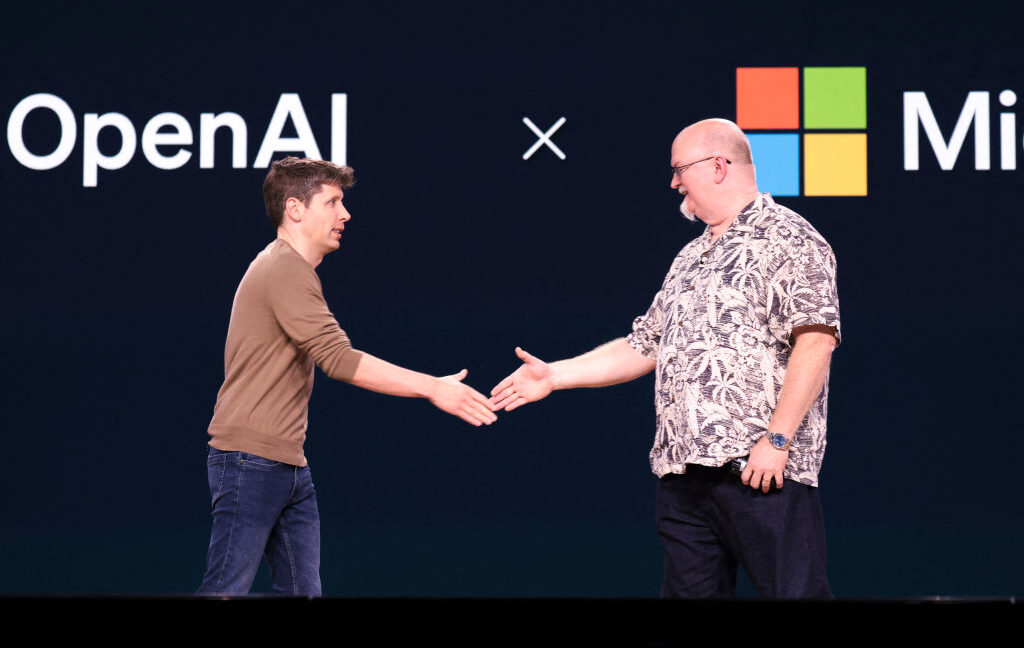
OpenAI has terminated its exclusive partnership with Microsoft, allowing its models to be deployed on other cloud platforms, including Amazon Bedrock. This shift marks a significant change in OpenAI's business strategy, enabling greater flexibility and competition in the AI cloud services market.
Sources reviewed
1
Linked below for direct verification.
Official sources
0
Preferred when available.
Review status
Human reviewed
AI-assisted draft, editor-approved publish.
Confidence
High confidence
90/100 from the draft pipeline.
This AI Signal brief is meant to save busy builders time: what changed, why it matters, and where the reporting comes from.
This story appears to rely mostly on secondary or mixed-source reporting, so readers should treat it as a developing summary rather than a final word. If you spot an issue, email [email protected] or read our editorial standards.
Share this story
Why it matters
- ✓Developers can now leverage OpenAI models on multiple cloud platforms, increasing options for integration and deployment.
- ✓This change may lead to reduced costs for businesses as they can choose cloud providers that best fit their budget and technical requirements.
- ✓Product teams can experiment with OpenAI's technology in diverse environments, fostering innovation and potentially leading to new applications.
OpenAI Ends Exclusive Partnership with Microsoft
OpenAI has announced the end of its exclusive partnership with Microsoft, allowing its AI models to be deployed on other cloud platforms, including Amazon Bedrock. This decision represents a significant shift in OpenAI's business strategy, providing developers and companies with greater flexibility in choosing their cloud service providers for AI applications.
What happened
According to a report from Ars Technica, the amended agreement between OpenAI and Microsoft clears the way for OpenAI's models to run on Amazon's cloud service, Bedrock. Previously, OpenAI's models were exclusively available through Microsoft Azure, limiting developers to a single cloud ecosystem. This change means that OpenAI's powerful AI models can now be accessed through multiple cloud platforms, enhancing the competitive landscape of AI services.
Why it matters
The end of the exclusive partnership has several implications for developers, builders, and product teams:
- Increased Options: Developers can now utilize OpenAI's models on various cloud platforms, such as Amazon Bedrock, which may offer different features, pricing, and integration capabilities compared to Microsoft Azure. This flexibility allows teams to select the best environment for their specific needs.
- Cost Reduction: With the availability of OpenAI models across multiple cloud providers, businesses can shop around for the most cost-effective solutions. This could lead to lower operational costs as companies can choose providers that align with their budgetary constraints.
- Innovation Opportunities: Product teams can experiment with OpenAI's technology in diverse environments, fostering innovation. The ability to integrate AI models into different platforms may lead to new applications and use cases that were previously constrained by the exclusive partnership.
Context and caveats
The shift away from an exclusive partnership reflects broader trends in the AI and cloud computing industries, where flexibility and competition are increasingly valued. However, the full implications of this change will unfold over time as developers and businesses adapt to the new landscape. It remains to be seen how other cloud providers will respond and whether this will lead to more competitive pricing or enhanced features across platforms.
What to watch next
As OpenAI's models become available on Amazon Bedrock and potentially other cloud platforms, developers should monitor how this impacts their existing projects and future developments. Key areas to watch include:
- Performance Comparisons: Developers will likely conduct performance comparisons between OpenAI's models on different cloud platforms, which could influence future adoption rates.
- New Features and Integrations: As OpenAI expands its reach, it may introduce new features or integrations that leverage the unique capabilities of various cloud providers.
- Market Reactions: Observing how other cloud providers respond to this change will be crucial, as they may adjust their offerings to compete more effectively with Microsoft and Amazon.
In conclusion, the end of OpenAI's exclusive partnership with Microsoft opens up new avenues for developers and product teams, allowing them to leverage AI models in a more flexible and cost-effective manner. As the landscape evolves, stakeholders should remain vigilant to capitalize on emerging opportunities.
Sources
- OpenAI ends its exclusive partnership with Microsoft — Ars Technica AI
Newsletter
Weekly AI signal. No spam.
More in Business

Replit Selects OpenAI as Default Model Provider, Phasing Out Anthropic
Replit has announced that it will replace Anthropic with OpenAI as its default model provider,…
9h ago

Anthropic Reports Shift in Workforce Composition and Meeting Culture
Anthropic has revealed that its workforce has become less junior and is now spending more time in…
9h ago

Replit CEO Envisions Future of Work as 'Self-Driving Companies'
Amjad Masad, CEO of Replit, has articulated a vision for the future of work characterized by…
15h ago

Websites Restrict Access for AI Agents
Several major websites are implementing restrictions that prevent AI agents from performing tasks…
15h ago
Comments
Sign in to join the discussion
Loading comments…