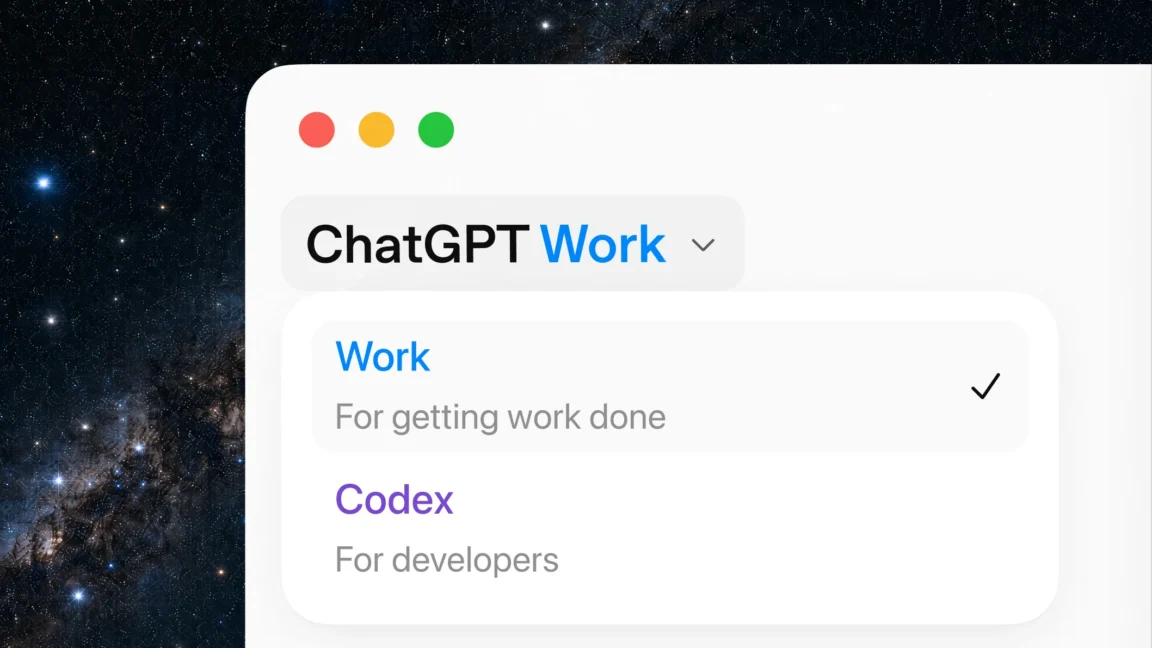
OpenAI Introduces Rebranded Codex for Independent Workflows

Edited by Orin Codewell
Tools & Coding · Updated July 11, 2026
OpenAI has unveiled a rebranded version of its Codex tool, designed to facilitate independent workflows that can operate autonomously for extended periods. This new tool aims to enhance productivity by allowing users to delegate tasks to the AI, thereby streamlining various work processes.
Sources reviewed
1
Linked below for direct verification.
Official sources
0
Preferred when available.
Review status
Human reviewed
AI-assisted draft, editor-approved publish.
Confidence
High confidence
90/100 from the draft pipeline.
This AI Signal brief is meant to save busy builders time: what changed, why it matters, and where the reporting comes from.
This story appears to rely mostly on secondary or mixed-source reporting, so readers should treat it as a developing summary rather than a final word. If you spot an issue, email [email protected] or read our editorial standards.
Share this story
Why it matters
- ✓Developers can leverage the new Codex to automate repetitive coding tasks, allowing them to focus on more complex problems.
- ✓Product teams may benefit from improved efficiency as the tool can handle long-running tasks without constant supervision.
- ✓Operators can integrate the tool into existing workflows, reducing the time spent on manual interventions and increasing overall productivity.
OpenAI Introduces Rebranded Codex for Independent Workflows
OpenAI has recently announced an updated version of its Codex tool, which is designed to perform tasks independently and efficiently for extended periods. This development is significant for developers, builders, operators, and product teams looking to enhance productivity and streamline workflows.
What happened
The rebranded Codex promises to run workflows autonomously, potentially for hours at a time. This capability allows users to delegate tasks to the AI, which can execute them without requiring constant oversight. The focus on independent workflows marks a shift in how developers and teams can interact with AI tools, moving from simple assistance to more autonomous operations.
Why it matters
The introduction of this new Codex tool has several concrete implications for various stakeholders in the tech industry:
- Developers: With the ability to automate repetitive coding tasks, developers can allocate their time to more complex and creative problem-solving, ultimately enhancing their productivity.
- Product Teams: The tool's capacity to handle long-running tasks independently means that product teams can streamline their processes, reducing bottlenecks and improving overall efficiency.
- Operators: By integrating the new Codex into existing workflows, operators can minimize manual interventions, leading to faster project completion and reduced operational costs.
Context and caveats
While the rebranded Codex presents exciting opportunities, it is essential to consider the context in which it operates. The effectiveness of the tool will depend on its integration into existing systems and the specific tasks it is designed to handle. Additionally, as with any AI tool, there may be limitations in its understanding of complex or nuanced tasks that require human judgment.
What to watch next
As OpenAI rolls out this new tool, it will be crucial to monitor user feedback and case studies that demonstrate its effectiveness in real-world applications. Developers and teams should also keep an eye on updates from OpenAI regarding enhancements and new features that may further improve the tool's capabilities. Understanding how this tool evolves will help stakeholders make informed decisions about its adoption and integration into their workflows.
In summary, the rebranded Codex from OpenAI represents a significant advancement in AI tools designed for productivity and efficiency. By enabling independent workflows, it has the potential to transform how developers, product teams, and operators approach their work.
Sources
- OpenAI wants its new tool to do your work for you and with you — Ars Technica AI
Newsletter
Weekly AI signal. No spam.
More in Tools

Vercel Launches Jev, Its Fastest-Adopted AI Model
Vercel has introduced Jev, marking it as the fastest-adopted AI model in the company's history.…
21h ago
Benefit Street Partners Enhances Efficiency with Codex
Benefit Street Partners has implemented OpenAI's Codex to streamline their processes in loan…
1d ago
Stack Overflow for Agents Sees Triple Signups with ChatGPT Plugin
Stack Overflow for Agents has experienced a significant increase in user signups, tripling the…
1d ago

Nvidia Launches RTX Spark N1X Processor in New Laptops
Nvidia has introduced its RTX Spark N1X processor, a powerful Arm-based SoC designed for laptops…
1d ago
Comments
Sign in to join the discussion
Loading comments…