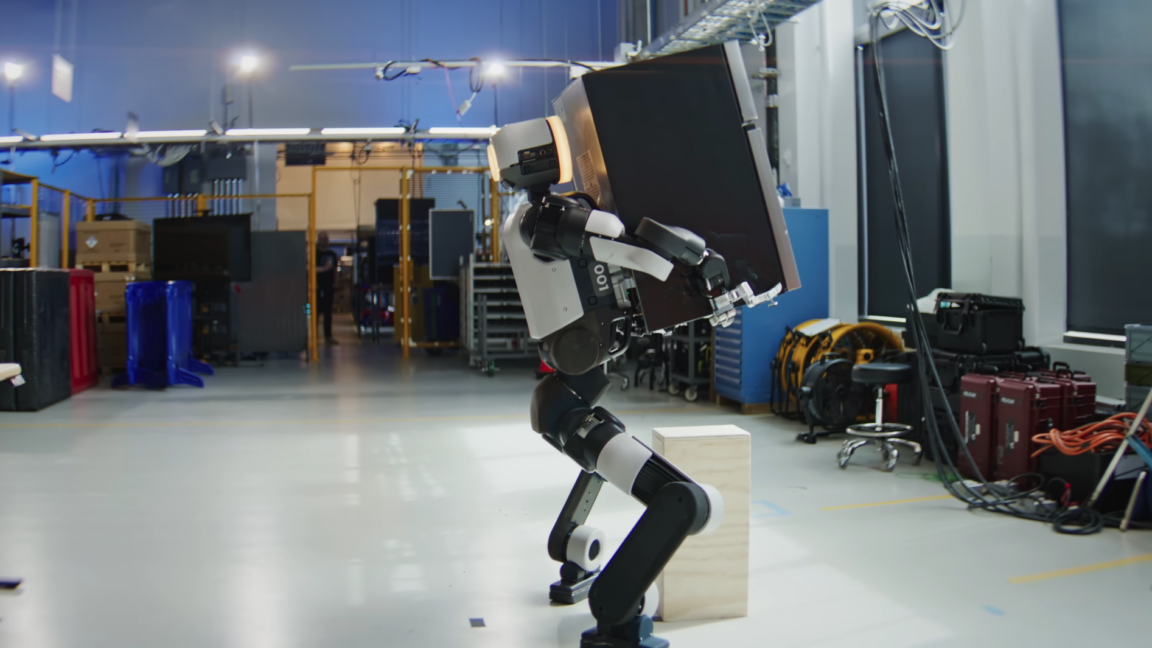
South Korea to Invest $1 Trillion in Memory Chip Production and Humanoid Robots

Edited by Sable Maranth
Regulation & Business · Updated July 5, 2026
South Korea has announced a significant investment of $1 trillion aimed at enhancing its memory chip production capabilities and developing commercial humanoid robots by 2028. This move is part of the country's strategy to establish a leading position in physical AI technologies. The investment is expected to bolster the nation's tech industry and create new opportunities for innovation in robotics and semiconductor manufacturing.
Sources reviewed
1
Linked below for direct verification.
Official sources
0
Preferred when available.
Review status
Human reviewed
AI-assisted draft, editor-approved publish.
Confidence
High confidence
90/100 from the draft pipeline.
This AI Signal brief is meant to save busy builders time: what changed, why it matters, and where the reporting comes from.
This story appears to rely mostly on secondary or mixed-source reporting, so readers should treat it as a developing summary rather than a final word. If you spot an issue, email [email protected] or read our editorial standards.
Share this story
Why it matters
- ✓Developers and product teams focused on AI and robotics may find new opportunities for collaboration and innovation as South Korea ramps up its investment in humanoid robots.
- ✓Increased production of memory chips could lead to more affordable and powerful hardware for AI applications, benefiting builders and operators who rely on advanced computing resources.
- ✓The focus on physical AI technologies may drive demand for specialized skills and knowledge in robotics and semiconductor design, impacting educational and training programs in these fields.
South Korea to Invest $1 Trillion in Memory Chip Production and Humanoid Robots
South Korea has made headlines with its announcement of a $1 trillion investment aimed at boosting memory chip production and developing commercial humanoid robots by 2028. This ambitious plan is part of the country's broader strategy to secure a leading position in physical AI technologies, which are becoming increasingly vital in various sectors, including manufacturing, healthcare, and consumer electronics.
What Happened
The South Korean government has outlined its commitment to significantly enhance its semiconductor industry, particularly in memory chip production, which is a cornerstone of modern computing. Alongside this, the nation is also focusing on the development of humanoid robots, aiming to integrate these advanced machines into everyday life and business operations. This initiative is expected to create a robust ecosystem for AI technologies and robotics, positioning South Korea as a global leader in these fields.
Why It Matters
The implications of this investment are substantial for various stakeholders in the tech industry:
- Opportunities for Developers and Product Teams: As South Korea invests heavily in humanoid robots, developers and product teams may find new avenues for innovation. This could lead to the creation of applications and services that leverage humanoid robots for tasks ranging from customer service to healthcare assistance.
- Enhanced Hardware for AI Applications: The increased production of memory chips is likely to result in more powerful and cost-effective hardware solutions. Builders and operators who depend on advanced computing resources for AI applications will benefit from improved access to high-performance memory solutions.
- Demand for Specialized Skills: The focus on physical AI technologies will likely drive demand for professionals skilled in robotics and semiconductor design. This could influence educational institutions to adapt their curricula to better prepare students for careers in these emerging fields.
Context and Caveats
This investment comes at a time when global competition in AI and semiconductor manufacturing is intensifying. Countries around the world are recognizing the strategic importance of these technologies, leading to increased investments and initiatives. However, the sourcing for this announcement is limited, primarily coming from Ars Technica, which highlights the need for further details on the specific projects and timelines involved in this investment.
What to Watch Next
As South Korea embarks on this ambitious investment plan, several key developments will be worth monitoring:
- Progress on Humanoid Robots: Observers should keep an eye on the advancements in humanoid robot technology, particularly in terms of functionality and integration into various sectors.
- Impact on Global Semiconductor Market: The effects of South Korea's increased memory chip production on global supply chains and pricing dynamics will be critical to watch, especially in light of ongoing semiconductor shortages.
- Collaboration Opportunities: Companies and startups in the AI and robotics space may find new collaboration opportunities with South Korean firms as they seek to leverage the country's advancements in technology.
In conclusion, South Korea's $1 trillion investment in memory chips and humanoid robots represents a significant step towards establishing a leadership position in physical AI technologies. The practical implications for developers, builders, and product teams are substantial, offering new opportunities for innovation and collaboration in the rapidly evolving tech landscape.
Sources
Newsletter
Weekly AI signal. No spam.
More in Business

Mark Wahlberg Advocates for Responsible AI Use in Filmmaking
Actor Mark Wahlberg has expressed his support for the use of artificial intelligence in filmmaking,…
4h ago

NVIDIA Veteran Discusses the Future of Physical AI Beyond Robotics
Amulya Vishwanath, a former product marketing lead at NVIDIA for robotics platforms, argues that…
10h ago
Itaú Implements Generative AI for Enhanced Customer Interaction
Itaú, one of Brazil's leading banks, is leveraging generative AI through its conversational…
16h ago

Katie Zacharia Linked to AI Rare-Earths Startup, Denies Involvement
Katie Zacharia, the former White House press secretary, was listed as an adviser to a company…
16h ago
Comments
Sign in to join the discussion
Loading comments…