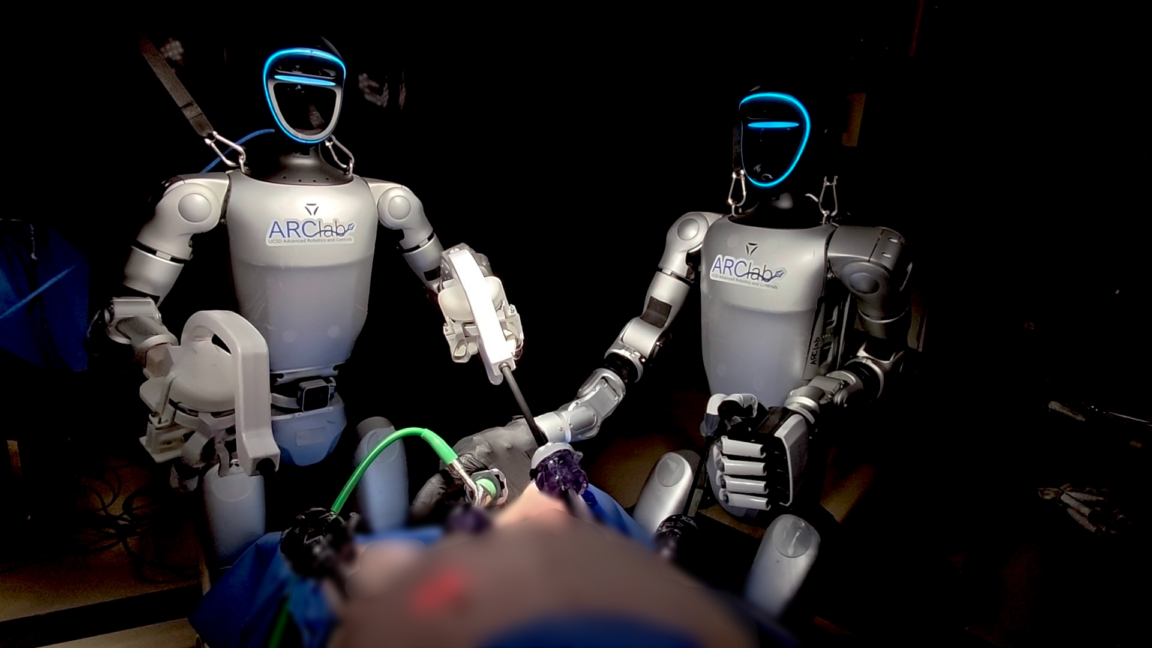
Surgeons Successfully Perform First Operation on Live Pigs Using Humanoid Robots

Edited by Lyra Voxley
Models & Research · Updated July 11, 2026
In a groundbreaking preclinical trial, surgeons have successfully conducted an operation on live pigs using humanoid robots. This marks a significant step in exploring the feasibility of robotic assistance in surgical procedures, potentially revolutionizing the field of surgery. The trial aims to assess the capabilities and effectiveness of humanoid robots in a surgical context.
Sources reviewed
1
Linked below for direct verification.
Official sources
0
Preferred when available.
Review status
Human reviewed
AI-assisted draft, editor-approved publish.
Confidence
High confidence
90/100 from the draft pipeline.
This AI Signal brief is meant to save busy builders time: what changed, why it matters, and where the reporting comes from.
This story appears to rely mostly on secondary or mixed-source reporting, so readers should treat it as a developing summary rather than a final word. If you spot an issue, email [email protected] or read our editorial standards.
Share this story
Why it matters
- ✓Developers can explore new opportunities in medical robotics, enhancing their skill sets and expanding their portfolios.
- ✓Builders of surgical robots may gain insights into the design and functionality needed for humanoid robots in complex surgical environments.
- ✓Operators in healthcare can anticipate changes in surgical practices, potentially leading to increased efficiency and precision in operations.
Surgeons Successfully Perform First Operation on Live Pigs Using Humanoid Robots
In a groundbreaking preclinical trial, surgeons have successfully conducted an operation on live pigs using humanoid robots. This operation is a significant step in exploring the feasibility of robotic assistance in surgical procedures, potentially revolutionizing the field of surgery. The trial aims to assess the capabilities and effectiveness of humanoid robots in a surgical context, paving the way for future advancements in medical technology.
What happened
The operation, which took place in a controlled environment, involved the use of humanoid robots that were directly controlled by surgeons. This innovative approach allows for a new level of precision and control in surgical procedures, as the robots can replicate the intricate movements required during surgery. The successful completion of this operation on live pigs represents a world-first achievement in the integration of humanoid robotics into surgical practices.
Why it matters
The implications of this trial extend beyond the immediate success of the operation. Here are some key points on why this development is significant:
- Opportunities for developers: The success of humanoid robots in surgery opens new avenues for developers in the medical robotics field. They can focus on creating software and systems that enhance the functionality and usability of these robots in surgical settings.
- Insights for builders: Builders of surgical robots can learn from this trial about the specific design and operational requirements needed for humanoid robots to perform complex surgeries effectively. This knowledge can guide future projects and innovations in robotic surgery.
- Impact on operators: Healthcare operators may need to adapt to new surgical practices that incorporate humanoid robots, potentially leading to improved efficiency and precision in surgical outcomes. This could also influence training programs for surgeons and medical staff.
Context and caveats
While this operation marks a significant milestone in the integration of robotics into surgery, it is essential to consider the context of this trial. The use of live pigs is a preclinical step, and further research will be necessary to evaluate the long-term effectiveness and safety of humanoid robots in human surgeries. Additionally, the scalability of this technology in real-world surgical environments remains to be seen, as does the regulatory landscape surrounding robotic surgery.
What to watch next
As this field continues to evolve, several aspects warrant close attention:
- Further trials: The outcomes of additional trials involving humanoid robots in surgery will be crucial in determining their viability for human applications. Observing how these trials progress will provide insights into the future of robotic surgery.
- Regulatory developments: As humanoid robots become more integrated into surgical practices, regulatory bodies will need to establish guidelines and standards to ensure patient safety and efficacy in robotic-assisted surgeries.
- Technological advancements: Innovations in AI and robotics will likely continue to enhance the capabilities of humanoid robots, making them more adaptable and effective in surgical settings.
In conclusion, the successful operation on live pigs using humanoid robots is a pivotal moment in the field of surgical robotics. It not only demonstrates the potential of robotic assistance in surgery but also sets the stage for future advancements that could transform surgical practices and improve patient outcomes.
Sources
Newsletter
Weekly AI signal. No spam.
More in Research

AI Models Struggle to Decode Complex Human Genomes
Current AI models are not yet equipped to effectively decode the complexities of human genomes due…
21h ago

Concerns Raised Over Chatbots Using Personal Pronouns
MIT professor Sherry Turkle has expressed concerns about the increasing emotional entanglement…
1d ago

OpenAI Launches GPT-Rosalind Academic Plan for Research Labs
OpenAI has introduced the GPT-Rosalind Academic Plan, which provides eligible academic research…
2d ago

Hugging Face Introduces 2.8 Trillion Tokens for Indic Language Pretraining
Hugging Face has announced a significant advancement in pretraining models for Indic languages,…
2d ago
Comments
Sign in to join the discussion
Loading comments…