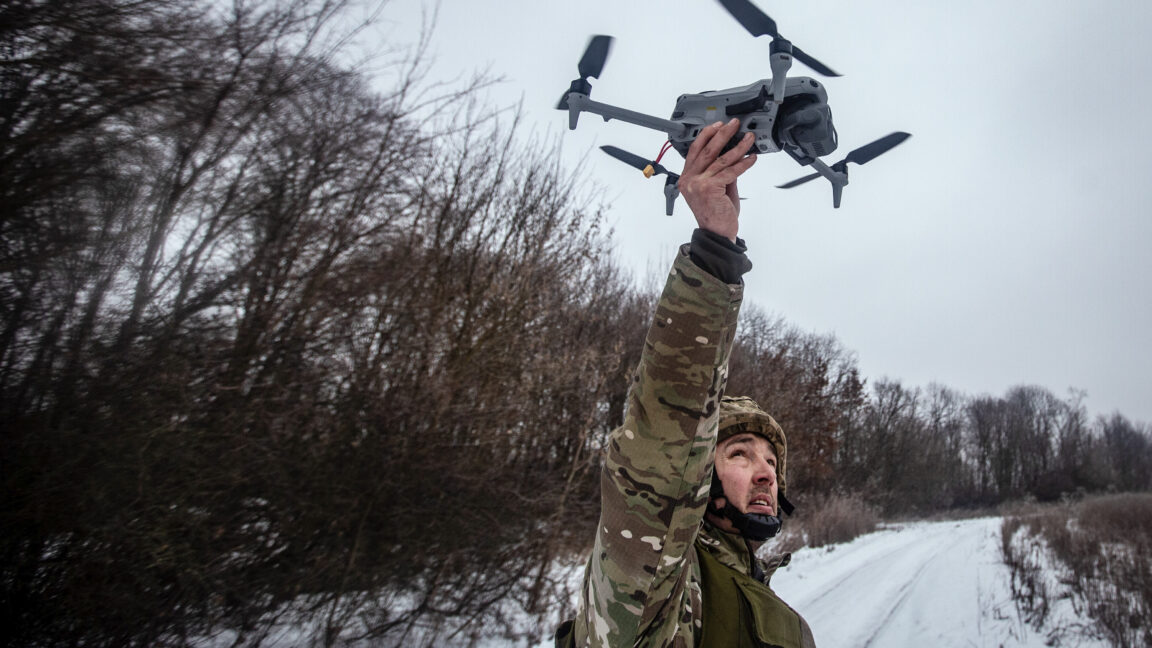
Ukraine Tests Fully Autonomous Drones in Combat Operations

Edited by Orin Codewell
Tools & Coding · Updated June 14, 2026
Ukraine has conducted a one-time test using fully autonomous drones to engage Russian soldiers, marking a significant development in military drone technology. This test involved the installation of AI modules on drones and robots, showcasing a shift towards greater autonomy in combat scenarios. While full autonomy remains rare, this test could influence future military strategies and drone deployments.
Sources reviewed
1
Linked below for direct verification.
Official sources
0
Preferred when available.
Review status
Human reviewed
AI-assisted draft, editor-approved publish.
Confidence
High confidence
85/100 from the draft pipeline.
This AI Signal brief is meant to save busy builders time: what changed, why it matters, and where the reporting comes from.
This story appears to rely mostly on secondary or mixed-source reporting, so readers should treat it as a developing summary rather than a final word. If you spot an issue, email [email protected] or read our editorial standards.
Share this story
Why it matters
- ✓Developers and builders in the AI and robotics fields may see increased demand for autonomous systems, particularly in military applications.
- ✓Product teams focused on drone technology may need to consider ethical implications and regulatory compliance as autonomous systems are integrated into combat operations.
- ✓Operators of military drones will need to adapt to new protocols and training requirements as the use of fully autonomous systems becomes more prevalent.
Ukraine Tests Fully Autonomous Drones in Combat Operations
Ukraine has recently made headlines by conducting a one-time test involving fully autonomous drones that engaged Russian soldiers. This operation represents a notable advancement in military drone technology, particularly in the realm of artificial intelligence (AI). The integration of AI modules into drones and robots indicates a significant shift towards greater autonomy in combat scenarios, which could have far-reaching implications for military strategies and the development of drone technology.
What Happened
According to a report from Ars Technica, Ukraine's test involved deploying drones equipped with AI capabilities to autonomously identify and target enemy soldiers. While the use of drones in military operations is not new, the full autonomy demonstrated in this test is relatively rare. The ability for drones to operate without direct human control raises important questions about the future of warfare and the role of AI in combat.
This test is part of a broader trend where military forces are increasingly exploring the potential of AI to enhance operational effectiveness. By installing AI modules on their drones, Ukraine is positioning itself at the forefront of this technological evolution.
Why It Matters
The implications of Ukraine's test with fully autonomous drones extend beyond military applications:
- Increased Demand for Autonomous Systems: Developers and builders in the AI and robotics sectors may experience a surge in demand for autonomous systems, particularly those designed for military use. As nations look to enhance their combat capabilities, the market for advanced drone technology is likely to grow.
- Ethical and Regulatory Considerations: Product teams focused on drone technology will need to navigate the ethical implications of deploying autonomous systems in combat. This includes ensuring compliance with international laws and regulations governing the use of lethal autonomous weapons systems (LAWS).
- Training and Operational Protocols: Operators of military drones will have to adapt to new protocols as the use of fully autonomous systems becomes more common. This may involve new training programs to ensure that personnel are equipped to manage and oversee these advanced technologies effectively.
Context and Caveats
While the test conducted by Ukraine is significant, it is important to note that full autonomy in military drones is still a developing area. The use of AI in combat raises complex ethical questions and concerns about accountability in warfare. As such, the international community is still grappling with how to regulate the use of autonomous weapons systems.
Moreover, the sourcing for this information is limited to a single report from Ars Technica, which may not provide a comprehensive view of the operational context or the broader implications of this test. Further investigations and reports will be necessary to fully understand the impact of Ukraine's actions on global military practices and AI development.
What to Watch Next
As the situation evolves, several key areas will be important to monitor:
- Further Developments in Autonomous Drone Technology: Watch for advancements in AI and drone technology that may emerge from this test and similar operations.
- International Response and Regulation: Keep an eye on how other nations respond to Ukraine's use of fully autonomous drones and whether new regulations or treaties regarding autonomous weapons will be proposed.
- Ethical Debates: The ethical implications of using AI in warfare will continue to be a topic of discussion among policymakers, military leaders, and technologists. Observing these debates will provide insight into how society views the future of combat technology.
In conclusion, Ukraine's test of fully autonomous drones marks a pivotal moment in the intersection of AI and military operations. As the technology continues to develop, it will be essential for all stakeholders to engage in discussions about the implications and responsibilities associated with autonomous systems in warfare.
Sources
Newsletter
Weekly AI signal. No spam.
More in Tools

Vercel Launches Jev, Its Fastest-Adopted AI Model
Vercel has introduced Jev, marking it as the fastest-adopted AI model in the company's history.…
21h ago

Benefit Street Partners Enhances Efficiency with Codex
Benefit Street Partners has implemented OpenAI's Codex to streamline their processes in loan…
1d ago
Stack Overflow for Agents Sees Triple Signups with ChatGPT Plugin
Stack Overflow for Agents has experienced a significant increase in user signups, tripling the…
1d ago

Nvidia Launches RTX Spark N1X Processor in New Laptops
Nvidia has introduced its RTX Spark N1X processor, a powerful Arm-based SoC designed for laptops…
1d ago
Comments
Sign in to join the discussion
Loading comments…