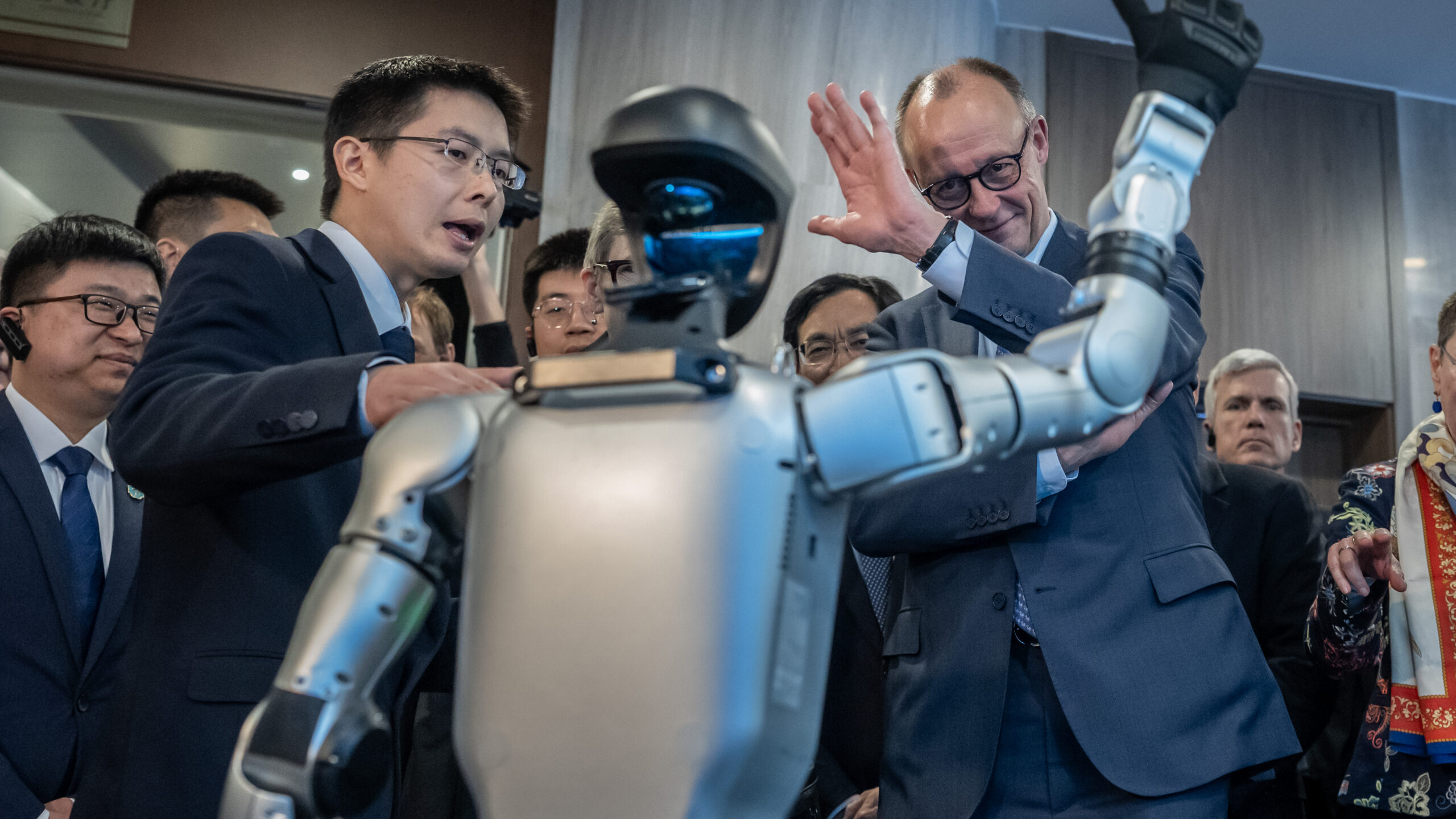
Unitree's Cost-Cutting Strategy Leads to Dominance in Affordable Humanoid Robots
Updated September 15, 2026
Unitree Robotics has gained a competitive edge in the humanoid robot market due to the founder Wang Xingxing's strict cost-cutting measures. This approach has allowed the company to produce robots at significantly lower prices than competitors. However, questions remain about whether this micromanagement style can sustain long-term growth and innovation.
Sources reviewed
1
Linked below for direct verification.
Official sources
0
Preferred when available.
Review status
Human reviewed
AI-assisted draft, editor-approved publish.
Confidence
High confidence
85/100 from the draft pipeline.
This AI Signal brief is meant to save busy builders time: what changed, why it matters, and where the reporting comes from.
This story appears to rely mostly on secondary or mixed-source reporting, so readers should treat it as a developing summary rather than a final word. If you spot an issue, email [email protected] or read our editorial standards.
Share this story
Why it matters
- ✓Developers can leverage Unitree's affordable humanoid robots for various applications, including research, education, and entertainment, without a significant financial burden.
- ✓Product teams may find inspiration in Unitree's cost-efficient strategies, encouraging them to explore innovative ways to reduce production costs while maintaining quality.
- ✓Operators in robotics and automation can benefit from the increased availability of low-cost humanoid robots, potentially expanding the market for robotic solutions in various industries.
Unitree's Cost-Cutting Strategy Leads to Dominance in Affordable Humanoid Robots
Unitree Robotics has made headlines for its remarkable rise in the humanoid robot market, primarily attributed to the founder Wang Xingxing's stringent cost-cutting measures. This focus on reducing expenses has enabled Unitree to produce robots at prices significantly lower than those of its competitors. However, the sustainability of this micromanagement approach raises questions about the company's long-term growth and innovation potential.
What happened
Wang Xingxing, the founder of Unitree, has been described as a micromanager whose obsession with cutting costs has driven the company's success in the competitive landscape of humanoid robotics. By focusing on efficiency and minimizing expenses, Unitree has been able to offer affordable humanoid robots, making them accessible to a broader range of customers. This strategy has positioned Unitree as a leader in a market that has traditionally been dominated by more expensive options.
Why it matters
The implications of Unitree's approach are significant for various stakeholders in the robotics industry:
- Developers: The availability of low-cost humanoid robots opens up new opportunities for developers to experiment and innovate without the financial constraints typically associated with advanced robotics. This could lead to more rapid advancements in robotics applications.
- Product Teams: Unitree's cost-efficient production methods may inspire product teams across industries to rethink their own strategies for reducing costs. By adopting similar practices, teams can enhance their competitiveness and potentially bring new products to market faster.
- Operators: For operators in sectors that utilize robotics, the increased availability of affordable humanoid robots could lead to broader adoption of robotic solutions. This may enhance operational efficiency and reduce labor costs in various applications, from manufacturing to service industries.
Context and caveats
While Unitree's cost-cutting measures have yielded impressive results, there are concerns about the long-term viability of this approach. Micromanagement can lead to challenges in scaling operations and fostering a culture of innovation. As the company grows, it will need to balance cost efficiency with the need for creative problem-solving and adaptability in a rapidly evolving market.
Moreover, the sourcing of this information is limited to a single article from Ars Technica, which highlights the founder's leadership style and its impact on the company's success. Further insights from industry experts or additional case studies would provide a more comprehensive understanding of Unitree's position in the market.
What to watch next
As Unitree continues to expand its presence in the humanoid robot market, it will be crucial to monitor how the company adapts its management style and operational strategies. Key areas to watch include:
- Innovation: Will Unitree maintain its focus on cost-cutting at the expense of innovation, or will it find a way to balance both?
- Market Response: How will competitors react to Unitree's success? Will they adopt similar cost-cutting measures, or will they focus on differentiating their products through advanced features?
- Customer Adoption: As more affordable humanoid robots enter the market, how will customers respond? Will the demand for these robots increase, and in what applications will they be most effectively utilized?
In conclusion, Unitree Robotics' focus on cost-cutting has positioned it as a leader in the affordable humanoid robot market. However, the sustainability of this approach remains to be seen, and its implications for developers, product teams, and operators in the robotics industry are significant.
Sources
Comments
Log in with
Loading comments…
More in Business

Jensen Huang Takes Call from Trump, Showcases New Technology
Jensen Huang, CEO of NVIDIA, recently took a live call from former President Donald Trump during a…
1h ago

Maven Robotics Launches with $100 Million Series A Funding
Maven Robotics has officially emerged from stealth mode, announcing a successful $100 million…
1d ago

Shift Towards Resource-Intensive AI Agents Drives Data Center Expansion
Silicon Valley is transitioning from traditional chatbot interactions to more resource-intensive AI…
1d ago

Sam Altman Declares OpenAI IPO in 2026 'Ill-Advised'
OpenAI CEO Sam Altman has stated that the company will not pursue an initial public offering (IPO)…
2d ago