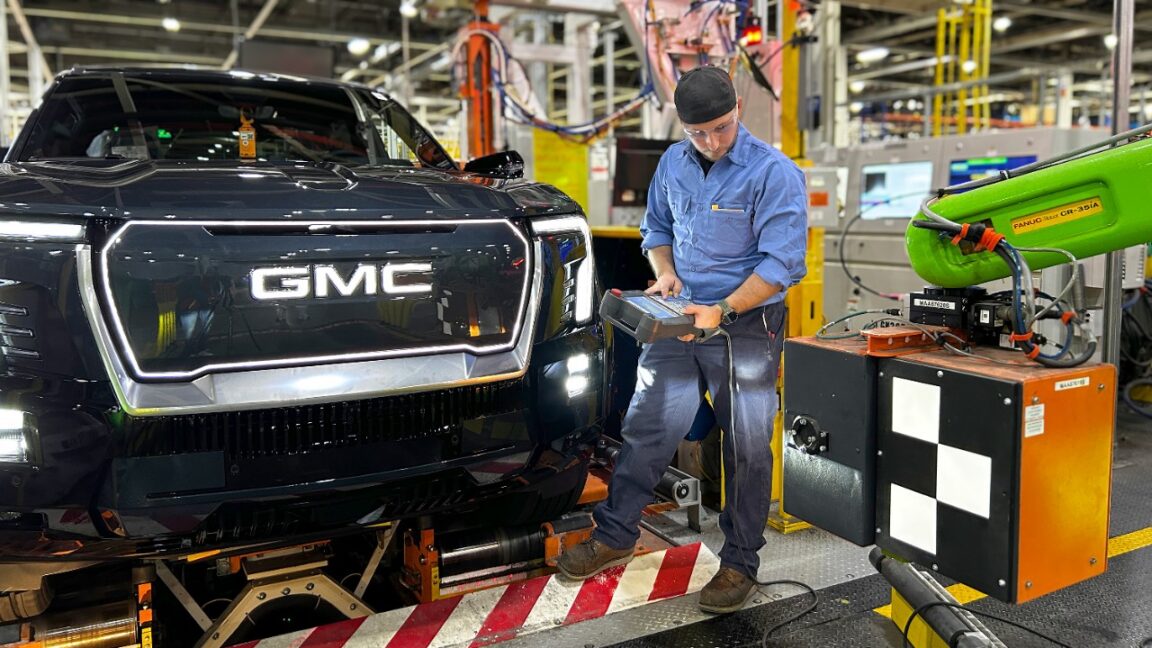
GM Installs Robots at Flagship EV Factory After Laying Off 1,300 Workers

Edited by Sable Maranth
Regulation & Business · Updated July 5, 2026
General Motors (GM) has begun installing robots at its flagship electric vehicle (EV) factory following the layoff of 1,300 workers. This move raises concerns among labor unions regarding the increasing automation in manufacturing and the potential impact on job security for autoworkers. The shift towards automation reflects a broader trend in the automotive industry as companies adapt to new technologies.
Sources reviewed
1
Linked below for direct verification.
Official sources
0
Preferred when available.
Review status
Human reviewed
AI-assisted draft, editor-approved publish.
Confidence
High confidence
85/100 from the draft pipeline.
This AI Signal brief is meant to save busy builders time: what changed, why it matters, and where the reporting comes from.
This story appears to rely mostly on secondary or mixed-source reporting, so readers should treat it as a developing summary rather than a final word. If you spot an issue, email [email protected] or read our editorial standards.
Share this story
Why it matters
- ✓Developers and builders in the automotive sector may need to adapt to new automation technologies, which could change the skill sets required in manufacturing environments.
- ✓Product teams should consider the implications of automation on labor relations and workforce management, as increased use of robots may lead to further job reductions.
- ✓Operators must prepare for the integration of robotic systems into existing workflows, which could enhance efficiency but also require significant training and adjustment.
GM Installs Robots at Flagship EV Factory After Laying Off 1,300 Workers
General Motors (GM) has taken a significant step towards automation by installing robots at its flagship electric vehicle (EV) factory, a move that follows the recent layoff of 1,300 workers. This decision has sparked concerns from labor unions about the future of jobs in the automotive industry as the company embraces new technologies to enhance production efficiency.
What Happened
In a bid to modernize its manufacturing processes, GM has started integrating robotic systems into its flagship EV factory. This development comes on the heels of a substantial workforce reduction, where 1,300 employees were laid off. The installation of robots is part of GM's strategy to streamline operations and increase the production of electric vehicles, which are becoming increasingly competitive in the automotive market.
The United Auto Workers (UAW) union has expressed alarm over the implications of this automation trend, warning that it may signal a shift towards a 'dark factory' future where human labor is significantly diminished in favor of machines. This situation raises critical questions about job security and the evolving landscape of employment in the automotive sector.
Why It Matters
The integration of robots into GM's manufacturing process has several implications for various stakeholders:
- Developers and Builders: As automation becomes more prevalent, developers and builders in the automotive industry may need to acquire new skills related to robotic systems and automation technologies. This shift could necessitate training programs to equip workers with the necessary expertise to operate and maintain these advanced systems.
- Product Teams: The move towards automation may lead product teams to rethink their strategies regarding labor relations and workforce management. With the potential for further job reductions, teams must consider how to balance technological advancements with employee morale and public perception.
- Operators: For operators, the introduction of robotic systems will require adjustments in existing workflows. While automation can enhance efficiency and reduce production costs, it also demands significant training and adaptation to ensure that human workers can effectively collaborate with machines.
Context and Caveats
The decision to install robots at GM's EV factory is part of a broader trend in the automotive industry where companies are increasingly adopting automation to remain competitive. While this shift can lead to improved efficiency and lower production costs, it also raises ethical and social concerns regarding job displacement and the future of work.
The UAW's warnings highlight the potential risks associated with this transition, emphasizing the need for a balanced approach that considers both technological advancement and the welfare of the workforce. As automation continues to evolve, it is crucial for companies to engage in transparent discussions with employees and unions to address these concerns.
What to Watch Next
As GM moves forward with its automation strategy, several key developments warrant attention:
- Further Layoffs: Watch for any additional workforce reductions as GM continues to implement robotic systems. The impact on employee morale and public perception could influence the company's reputation and labor relations.
- Union Responses: The UAW's ongoing response to GM's automation efforts will be critical. Their actions could shape the future of labor negotiations and influence how other companies approach automation in the industry.
- Technological Advancements: Keep an eye on advancements in robotics and automation technologies that may further transform manufacturing processes. Understanding these developments will be essential for stakeholders in the automotive sector to remain competitive.
In conclusion, GM's installation of robots at its flagship EV factory marks a pivotal moment in the automotive industry's shift towards automation. While this move promises increased efficiency, it also raises significant concerns about job security and the future of work in manufacturing. Stakeholders must navigate these changes thoughtfully to balance technological progress with the needs of the workforce.
Sources
- GM installs robots at flagship EV factory after laying off 1,300 workers — Ars Technica AI
Newsletter
Weekly AI signal. No spam.
More in Business

Replit Selects OpenAI as Default Model Provider, Phasing Out Anthropic
Replit has announced that it will replace Anthropic with OpenAI as its default model provider,…
9h ago

Anthropic Reports Shift in Workforce Composition and Meeting Culture
Anthropic has revealed that its workforce has become less junior and is now spending more time in…
9h ago

Replit CEO Envisions Future of Work as 'Self-Driving Companies'
Amjad Masad, CEO of Replit, has articulated a vision for the future of work characterized by…
15h ago

Websites Restrict Access for AI Agents
Several major websites are implementing restrictions that prevent AI agents from performing tasks…
15h ago
Comments
Sign in to join the discussion
Loading comments…