
Microsoft Unveils Maia 300 AI Chip to Reduce Reliance on Nvidia GPUs

Edited by Orin Codewell
Tools & Coding · Updated October 13, 2026
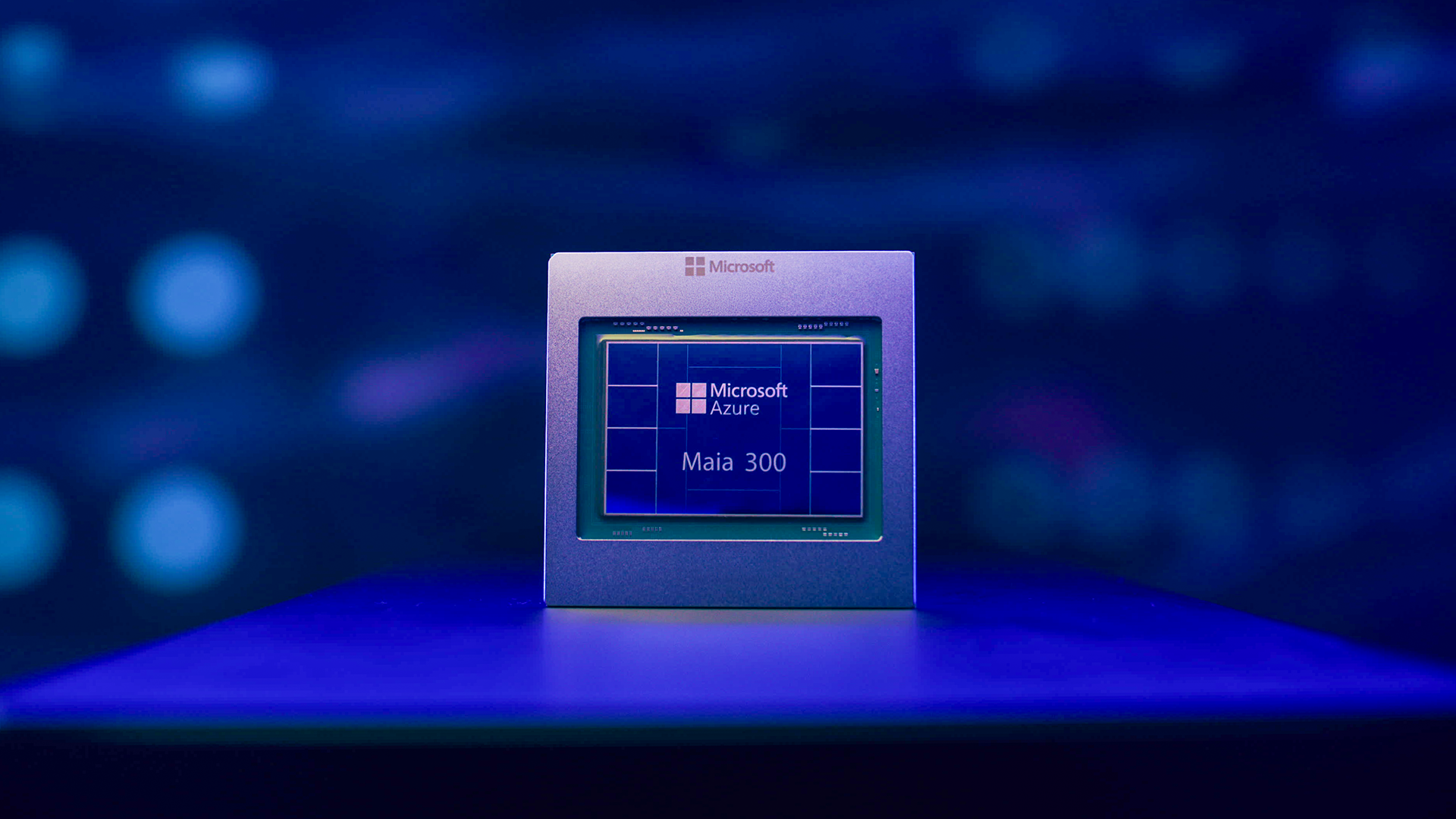
Microsoft has announced the Maia 300, its third-generation in-house AI chip, aimed at becoming the primary AI inference system for its products and services. The chip is designed to enhance the efficiency and cost-effectiveness of AI workloads in the cloud, with a rollout planned for 2027.
Sources reviewed
1
Linked below for direct verification.
Official sources
0
Preferred when available.
Review status
Human reviewed
AI-assisted draft, editor-approved publish.
Confidence
High confidence
90/100 from the draft pipeline.
This AI Signal brief is meant to save busy builders time: what changed, why it matters, and where the reporting comes from.
This story appears to rely mostly on secondary or mixed-source reporting, so readers should treat it as a developing summary rather than a final word. If you spot an issue, email [email protected] or read our editorial standards.
Share this story
Why it matters
- ✓The Maia 300 chip is expected to deliver 40% more tokens per megawatt compared to leading GPU-based systems, which could significantly lower operational costs for AI tasks.
- ✓With this chip, Microsoft aims to reduce its dependency on Nvidia's GPUs, potentially leading to more competitive pricing and improved performance for developers using Azure services.
- ✓The enhanced capability to handle advanced reasoning models and agentic tasks may enable developers to create more sophisticated AI applications and services.
Microsoft Unveils Maia 300 AI Chip to Reduce Reliance on Nvidia GPUs
Microsoft has announced the Maia 300, its third-generation in-house AI chip, which is designed to serve as the primary AI inference system for the company's products and services. This development marks a significant step in Microsoft's strategy to enhance the efficiency and cost-effectiveness of AI workloads in the cloud, with the Maia 300 expected to be rolled out to production in 2027.
What happened
The Maia 300 chip represents a major advancement in Microsoft's AI capabilities. According to Scott Guthrie, executive vice president of Microsoft's cloud group, the chip is engineered to deliver 40% more tokens per megawatt compared to leading GPU-based systems. This improvement is crucial as it addresses the growing demand for efficient AI processing in cloud environments. The chip's design focuses on handling the latest reasoning models and agentic tasks, which are essential for developing more advanced AI applications.
Why it matters
The introduction of the Maia 300 chip has several implications for developers, builders, and product teams:
- Cost Efficiency: The expected increase in tokens per megawatt means that developers can run AI workloads more cost-effectively, potentially lowering the overall expenses associated with cloud-based AI processing.
- Reduced Dependency on Nvidia: By developing its own chip, Microsoft aims to decrease its reliance on Nvidia's GPUs. This shift could lead to more competitive pricing for Azure services, benefiting developers who utilize these platforms for their AI projects.
- Enhanced Capabilities: The Maia 300's ability to handle advanced reasoning models and agentic tasks opens up new possibilities for developers to create more sophisticated and capable AI applications, enhancing the overall user experience.
Context and caveats
While the Maia 300 chip is a promising development, it is important to note that the rollout is not expected until 2027. This timeline means that developers will need to continue relying on existing solutions, including Nvidia's GPUs, for the foreseeable future. Additionally, the actual performance and efficiency gains of the Maia 300 will need to be validated once it is deployed in real-world scenarios.
What to watch next
As Microsoft prepares for the rollout of the Maia 300, it will be crucial to monitor how this chip performs in comparison to existing GPU solutions. Developers should keep an eye on updates from Microsoft regarding the chip's capabilities and any potential impacts on Azure pricing and service offerings. Furthermore, the broader implications of this shift in chip design could influence the competitive landscape of AI processing in the cloud, prompting other companies to explore similar strategies.
In conclusion, the Maia 300 chip represents a significant step forward for Microsoft in its quest to enhance AI processing capabilities while reducing reliance on external hardware providers. As the rollout approaches, developers and product teams should prepare to leverage these advancements for their AI initiatives.
Sources
More in Tools

Honeyjar Launches AI Tools to Enhance PR and Communications
Honeyjar has introduced a suite of AI tools designed to streamline public relations and…
7h ago
Microsoft Unveils Custom Chip: Maia 300
Microsoft has introduced its latest custom chip, the Maia 300, designed to enhance AI capabilities…
13h ago

Google Launches AI Edge Foresight App to Compete with Granola
Google has introduced a new app called AI Edge Foresight, designed to compete with Granola by…
19h ago

Oracle Accelerates Workflows with ChatGPT and Codex Integration
Oracle has successfully integrated ChatGPT Work and Codex into its operations, significantly…
1d ago
Comments
Sign in to join the discussion
Loading comments…